
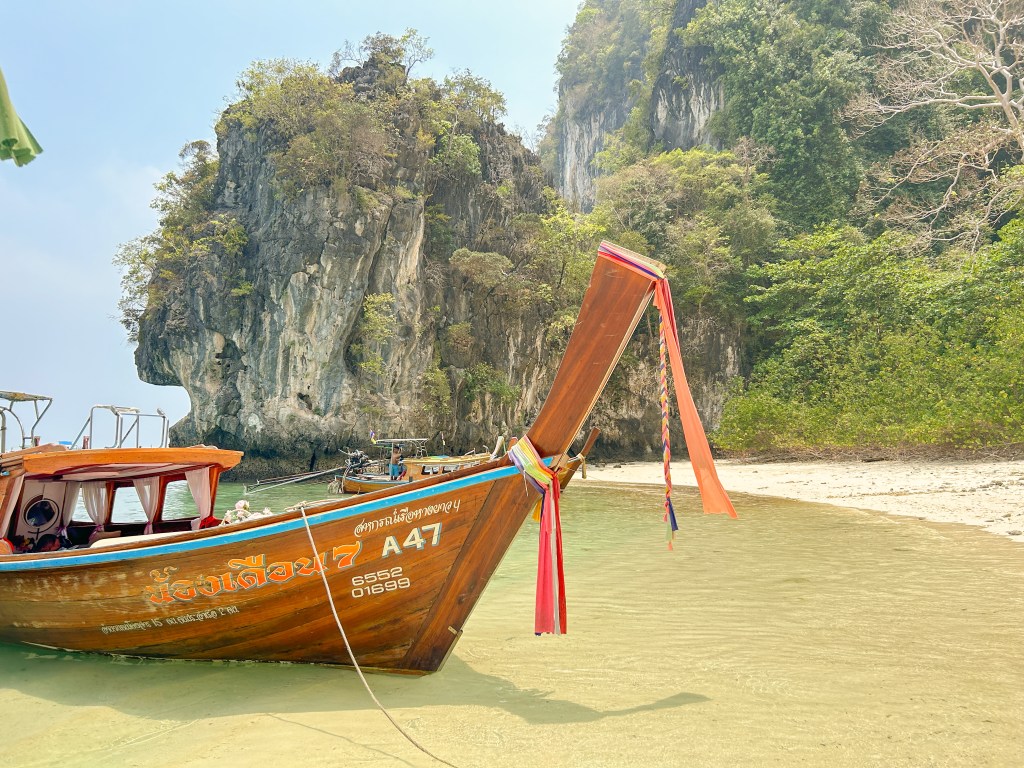
If you’re new here, this is part of my Planning a Long-Term Trip series, where I show you how to plan for a long-term trip. This series goes over everything from planning routes to getting travel vaccinations to driving in a foreign country. Today I’ll be going over researching your intended destination.
- Travel Resources for Planning
- Topics to Research in a Destination
- How to Organize Travel Research
- Conclusion
In all honesty, researching your destination can be a daunting task. At first it’s exciting researching all the places you could go and things you could do. And then imagining yourself in those places doing those things is a wonderful day dream. But after a while it can start to feel a bit like a chore, especially when you’re researching multiple locations.
I have a couple of ways that I go about researching potential travel destinations which I will detail in-depth below. But before I get into those details I want to preface with the following:
How much you want to research and the methods you go about researching is all up to you. There is no right or wrong way to do it. I’ve met people who just show up in a new destination with absolutely no idea what there is to do. They figure it out along the way and rely heavily on the recommendations of fellow travelers and locals.
I personally prefer to do a lot of research beforehand. I plan to the max and then allow room in my room in my itinerary for some spontaneity along the way. That way I can make sure I get to see what I really want while also being able to consider the recommendations of others. So now, let’s get into it!
Travel Resources for Planning
Firstly, I want to outline some travel resources that I frequently use when planning for trips. These are my main sources of information prior to arriving at a destination (when I can get recommendations from locals or fellow travelers).
Travel Guide Books
I think these books do a great job at giving you a lot of information in a single, easy to reference format. Guide books are probably best used for introductory research and to familiarize yourself with the region and popular itineraries. You can find used, slightly outdated guidebooks for reasonable prices online. To be even more budget friendly you can go to your local library and check out a guide book for free.
Blogs & Tourism Websites
When researching information on more specific things to do in cities, countries, or regions, I often find myself on blogs or official tourism websites. Many cities will have websites dedicated to increasing tourism which outlines things to do in the area. You just have to keep in mind that those websites are likely not going to tell you if a certain attraction is not worth visiting. So I think blogs provide pretty reliable recommendations based on experience. If you find a lot of blog posts raving about a certain city or attraction in a city, it’s probably legit.
Social Media
I hesitate to put this one on this list, but I do sometimes find unique places to visit on social media. I personally would not use this as any main source for travel research for a couple of reasons. First, social media is easy to fake (the Gate of Heaven in Bali is a perfect example). Second, content creators often get paid to promote attractions or make them look good, likely better than they are in reality. And third, the places that become popular on social media can come with long lines and a sense of being underwhelmed.
I have saved folders for different locations on my social media accounts for posts about interesting places. I also will not go anywhere based solely on a social media post. I will vet it first by looking it up online and reading through Google reviews to get a more accurate picture. You could also search for travel guides on YouTube, but in my opinion videos consume more time than I prefer to spend when researching. And there’s often repeat information from research I’ve already completed.
Google Reviews & Trip Advisor:
I don’t use these websites to find places to visit or things to do, but I will read through the reviews of a specific attraction I’m interested in. I tend to use this more often when I’m actively traveling just to do a quick check up before I go out of my way to visit something.
On a trip, I always check Google Maps and sort the reviews by ‘newest’ to make sure that the place is still operational, has accurate hours, and has positive recent reviews. For short term trips, I use Google Maps and Trip Advisor to read recent reviews and help me narrow down my itinerary when I have limited time. For long term trips, if I get recommendations from fellow travelers, I will save the location in Google Maps and make a note about it.
Topics to Research in a Destination
Regardless of how extensively you want to conduct your research, I would recommend looking into the following topics to at least familiarize yourself. I found it very useful to have all of this research already compiled and completed prior to my trip. It helped me plan out other aspects such as the route and timeline. But it was also super useful to reference prior to entering a new city or country. I could pretty quickly make a plan for the day by looking at what I had already researched.
Main attractions & activities
This will be the bulk of your research. You don’t need to look into every little thing that there is to do, but try and get a good idea. Sightseeing could include monuments, museums, temples or churches, markets, etc. You should also research activities and experiences such as cooking classes, hiking, snorkeling or diving, etc. Tailor your research towards the things you like to do.
Tip: If something is an absolute must visit / non-negotiable for you, highlight it and put it in a separate document or note. If you have a list of the must-see’s then you can ensure your trip incorporates them when planning the route, timing, and budget. I would take note of what the must visit is, where it is located, how much it costs, how much time it will take, and any restrictions on visitation.
Weather
This shouldn’t take a lot of time to look into but it will impact your planning when choosing a route, and also when packing. Are you going to the northern or southern hemisphere? What months are hot, what months are cold? When is the rainy and dry season? Are you going to be moving through a lot of different climates? There might be a place you want to visit that you can only go to during a certain time frame due to the weather. If you avoid this step you might unintentionally hit the rainy season in all the countries you visit.
Local customs, government, laws & religion
This topic only takes a quick google search or flip through a guide book. You’ll want to know the basic laws, government, religion, and some local customs for the countries you’re visiting. You should strive to be a responsible and respectful traveler and this is one of the ways you can do so.
Local customs
Local customs are so interesting and fun to learn about. You’ll learn a lot on your trip and from the locals themselves. But you should do a quick search to make sure you avoid offending anyone.
Government & laws
Knowing the government and any applicable laws that might be different from your home country can make sure you stay out of trouble. In some countries it’s illegal to take a photograph of law enforcement officials or to speak negatively of the royal family. You also want to make sure you understand the severity of drug laws in different countries. Some drugs may be legal where you come from but can hold the death penalty in other countries. Just be aware and make smart choices.
Religion
Researching what the majority religion is will help you dress and act appropriately and respectfully. Religion affects everyone, but as a female traveler you may have to follow more rules in certain parts of the world, and may be treated differently.
Festivals & holidays
Knowing about some of the biggest holidays, festivals, and celebrations will help you plan your route. You might want to attend a festival and need to be in a certain city or country at a certain time. Or you might want to avoid going to a country during a certain holiday. Sometimes with holidays comes shops, restaurants, and attractions being closed for a period of time.
Transportation
Knowing about the local transportation options will come in handy when planning your route and budget. Major cities usually have plenty of public transportation options. But if you’re visiting remote or less developed areas, you should look into the ease of access and cost of getting there. There are some places you might not want to visit if you aren’t able to ride a motorbike to get around.
You should also look into how much distance you might be covering between locations and if they are serviced with buses, trains, boats, or planes. For long distances it would be helpful to know an average range for how much different transportations options cost to get between places.
Additional research topics
Because I love to plan, a couple of bonus topics I enjoy researching include local foods to try, how cheap or expensive a country is relative to my home currency, and whether or not there are a lot of hostels in the area.
How to Organize Travel Research
I have a series of folders within my Google Drive that I use to plan out trips. My drive is organized by continent, country and trip (if I’m researching for a long-term, multi-country trip). I make a document for each country that I’m planning on visiting. In addition to my country specific documents, I have a separate document that highlights my non-negotiable, absolutely must-visit places and activities. I gradually add to this list as I do my research.
I have a template that I use for all of my travel research which incorporates all of the information discussed above. The only thing that changes is how in-depth my research is. The length of my trip usually determines how thorough I am in my destination specific research. Typically I do more research for shorter trips and a bit less for longer trips.
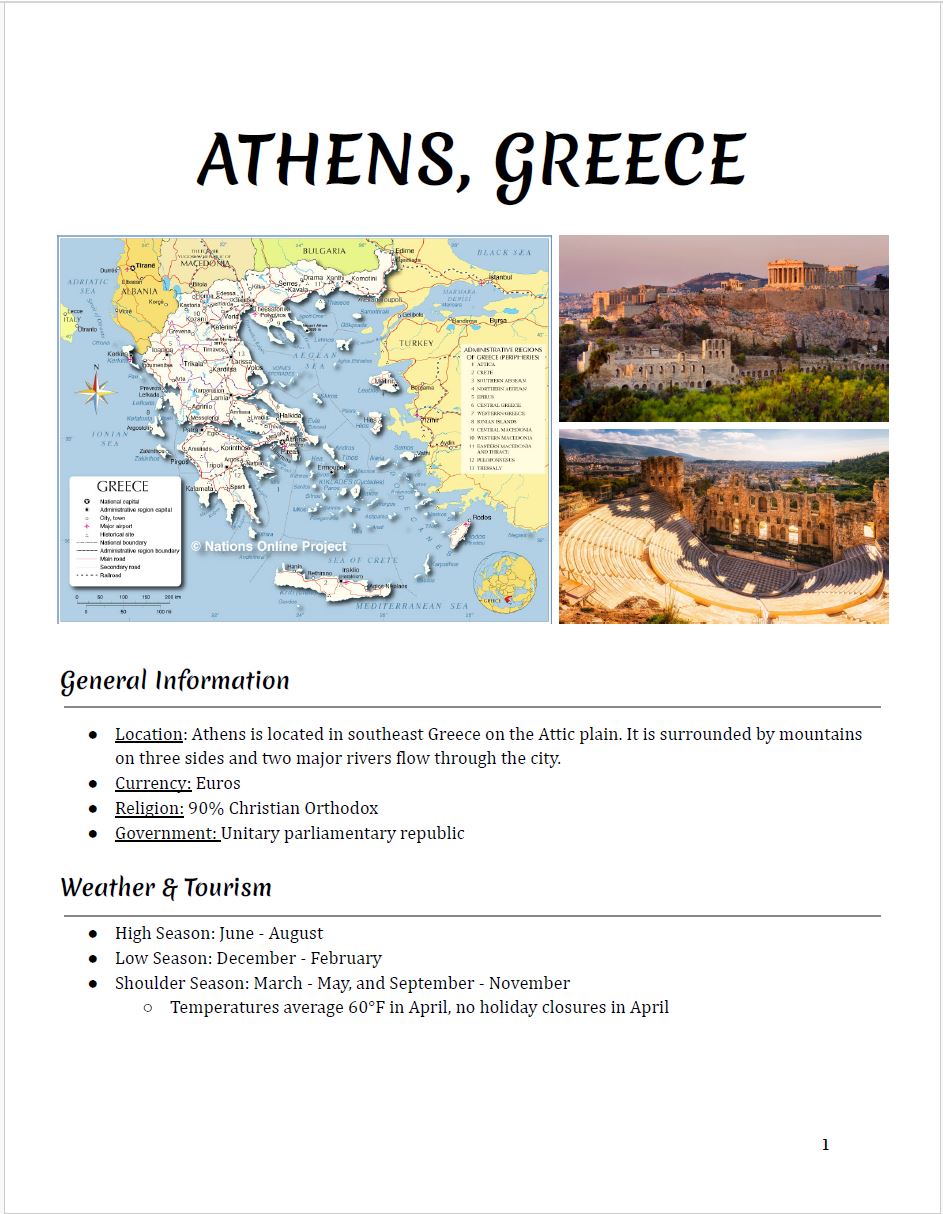
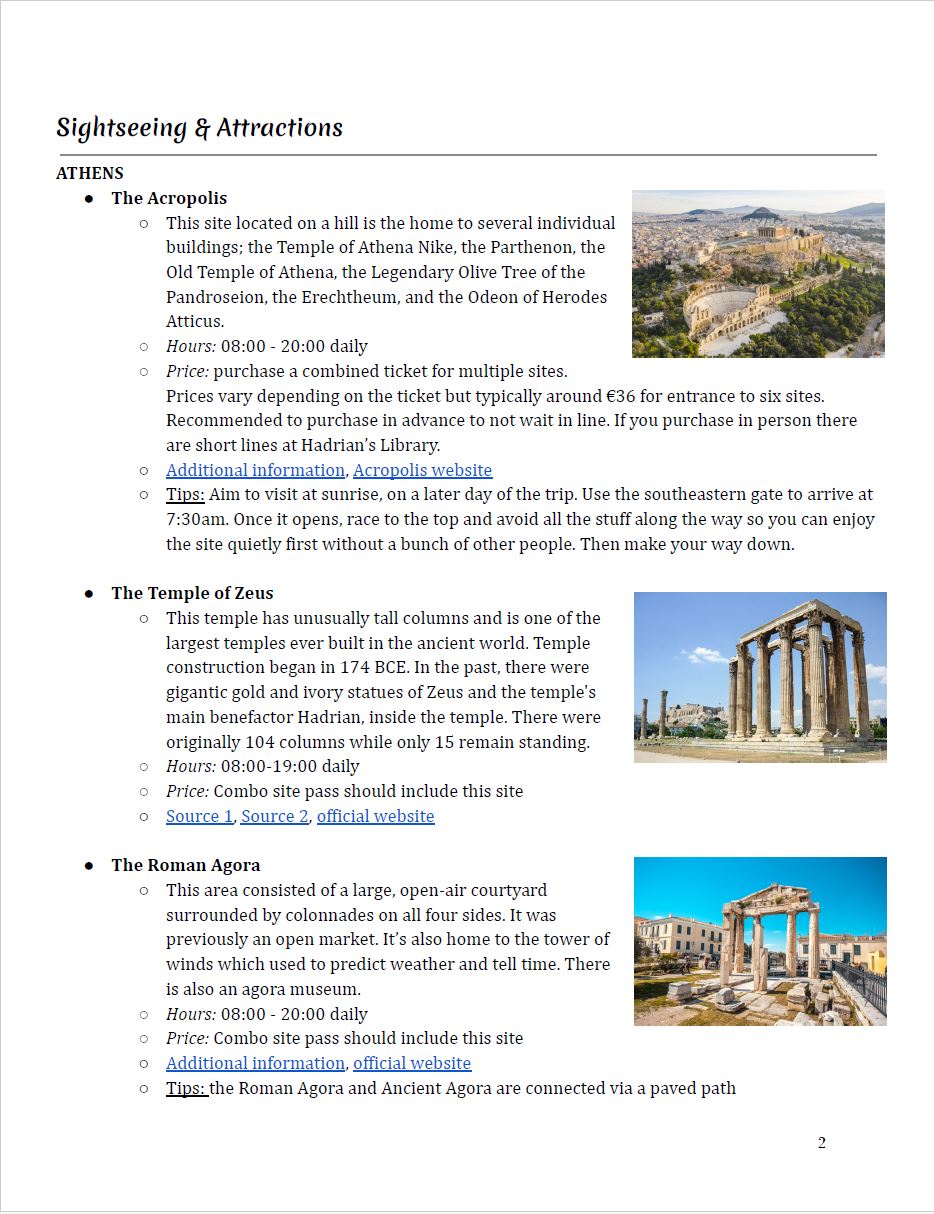
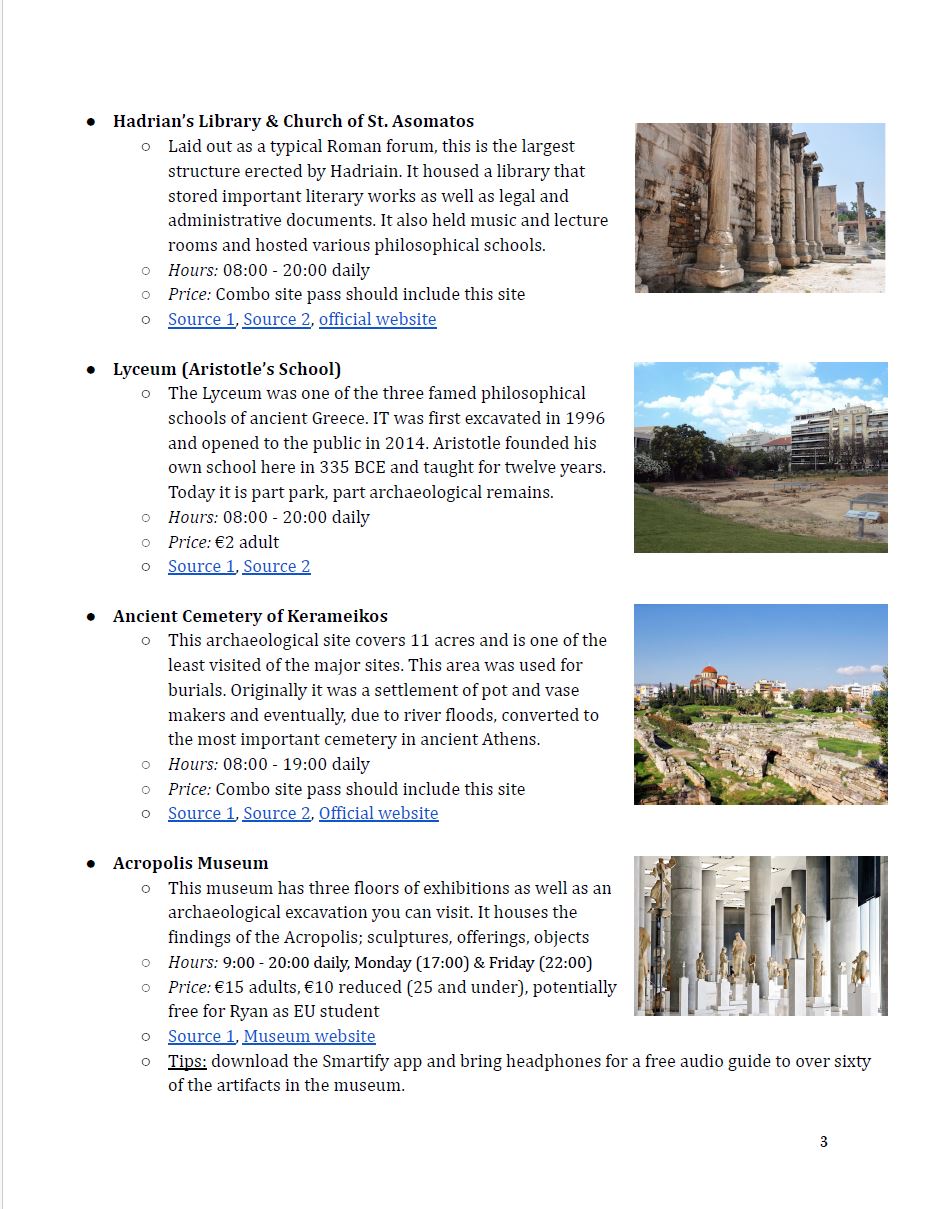
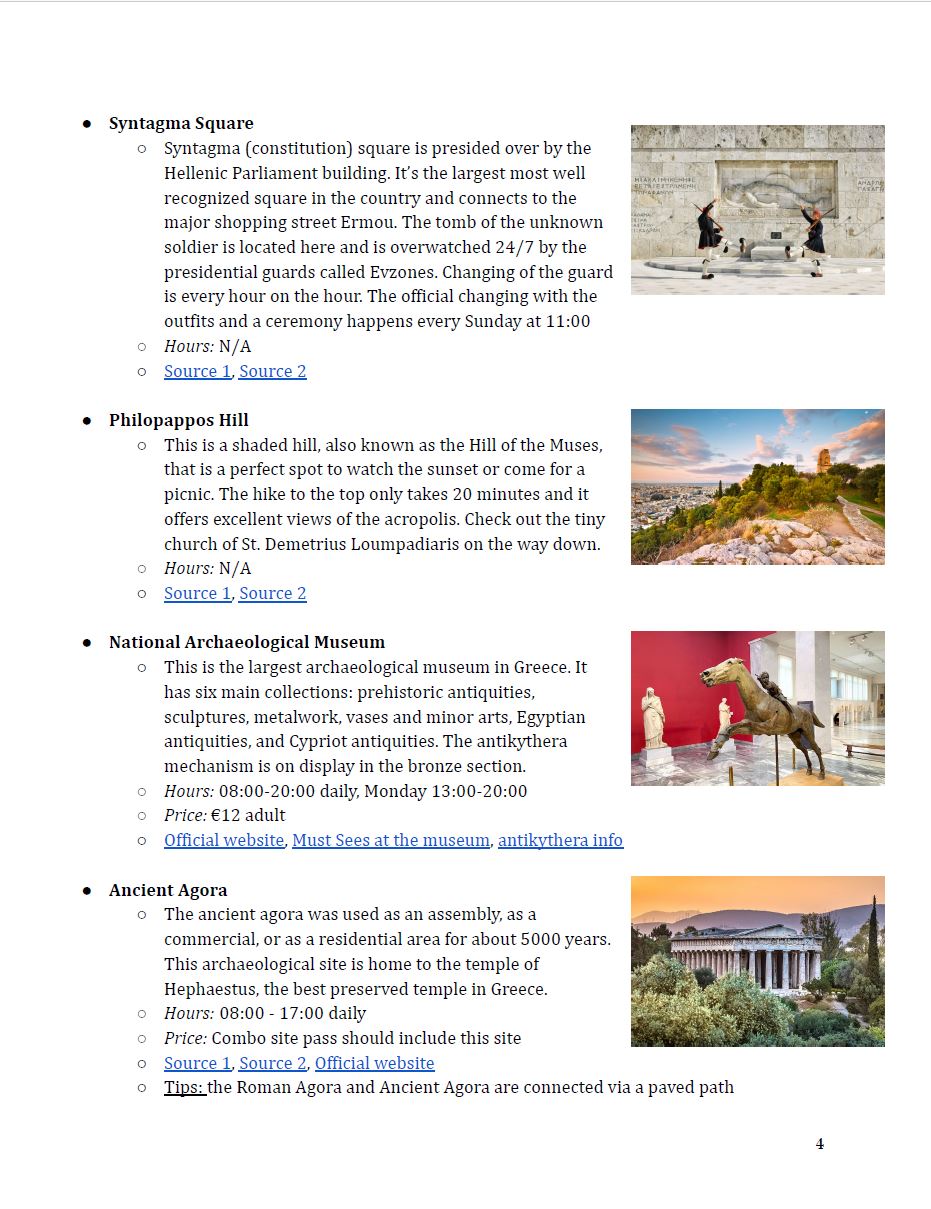
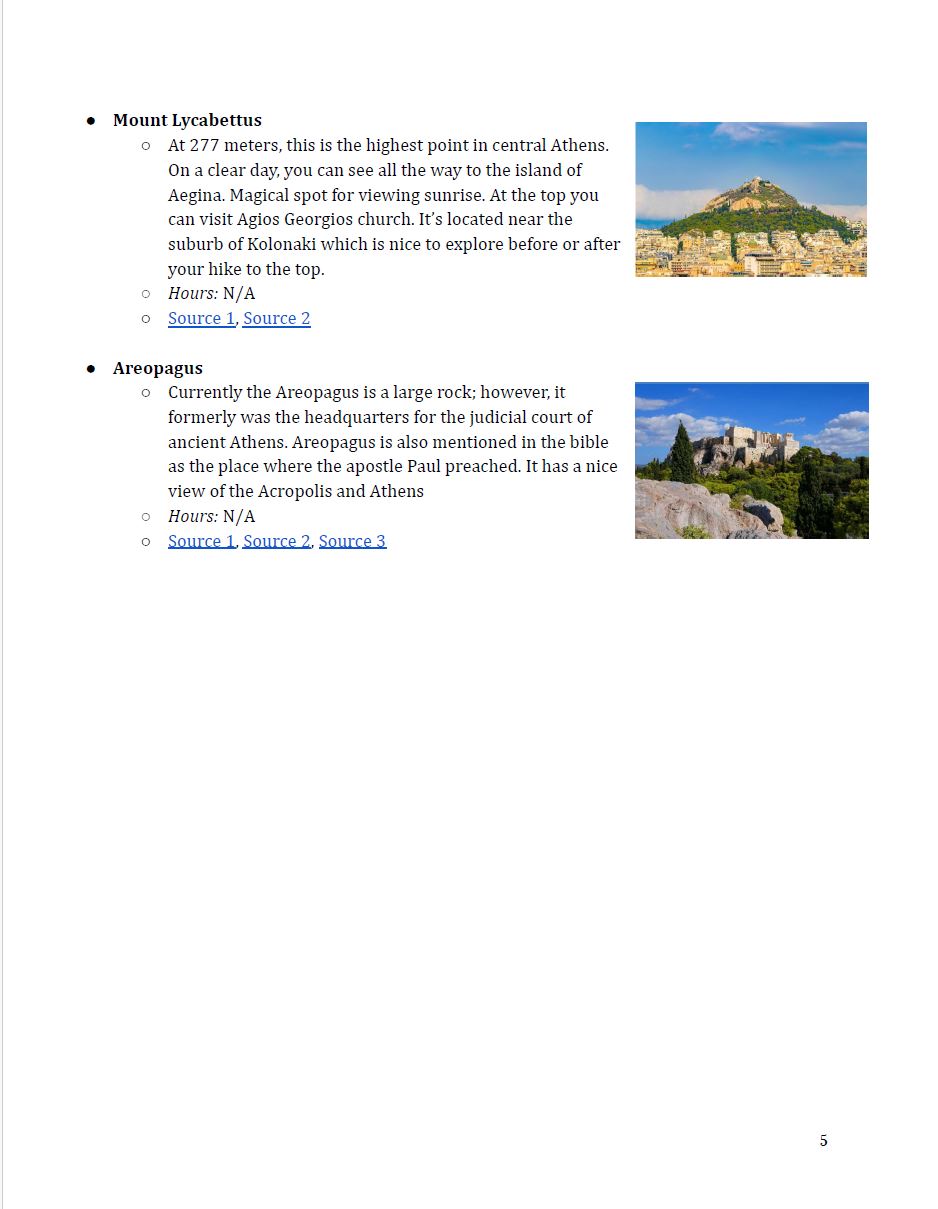
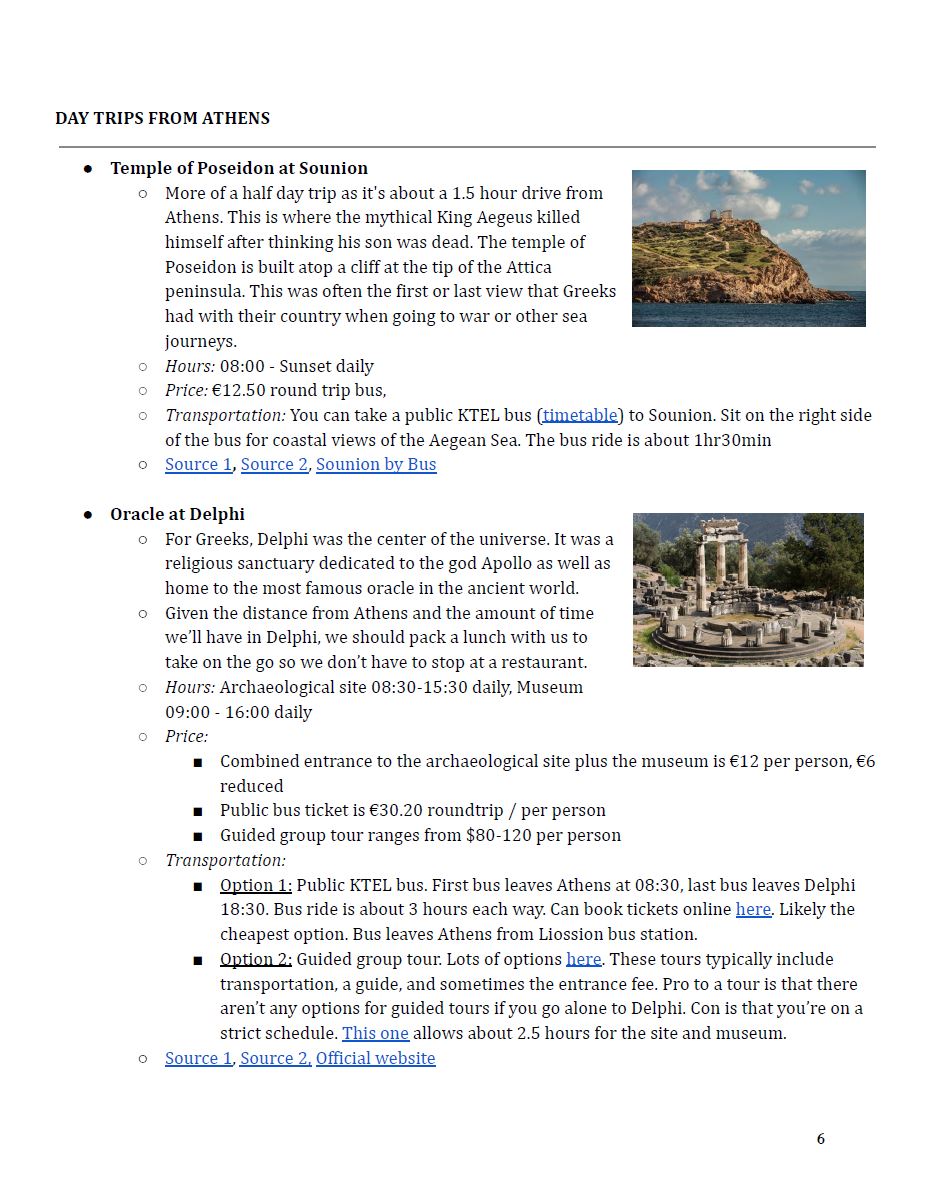
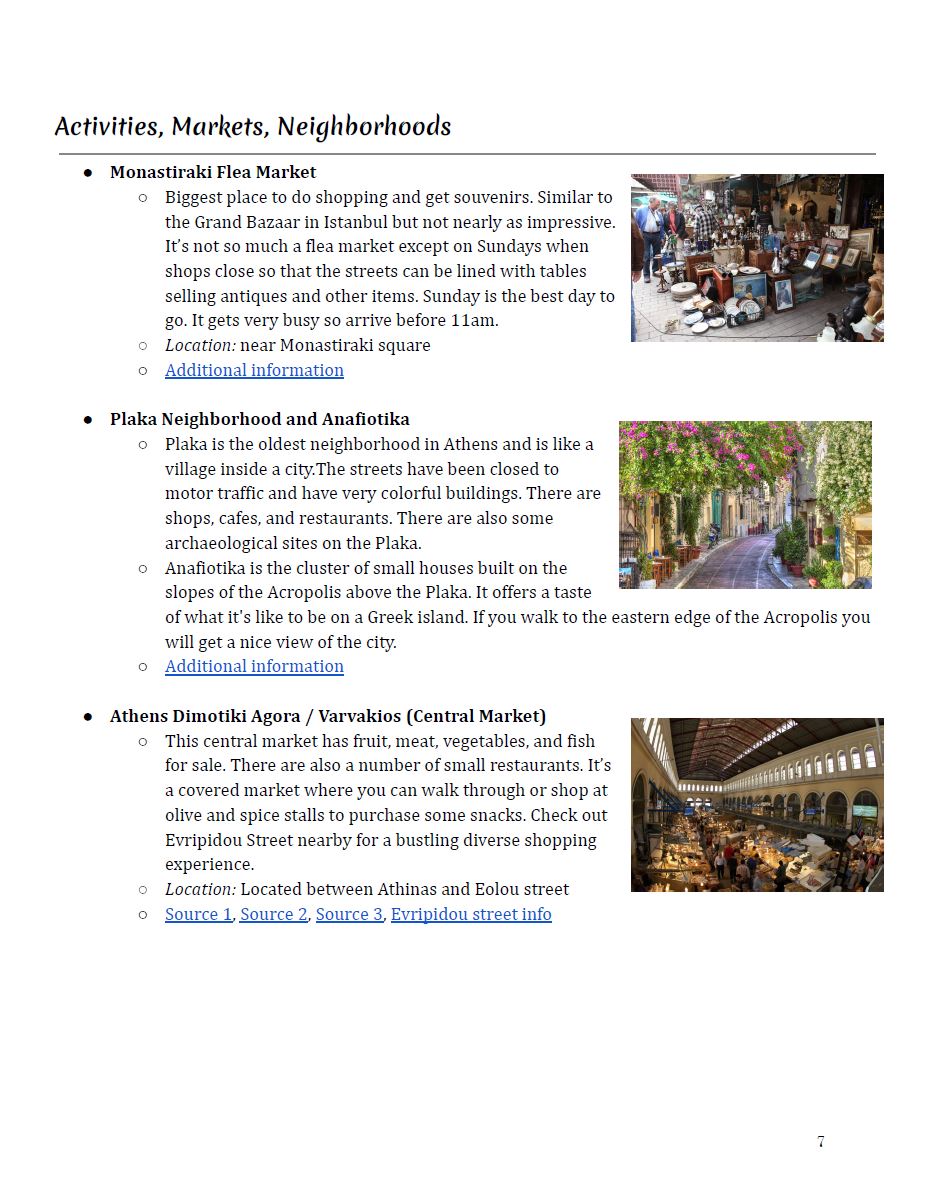
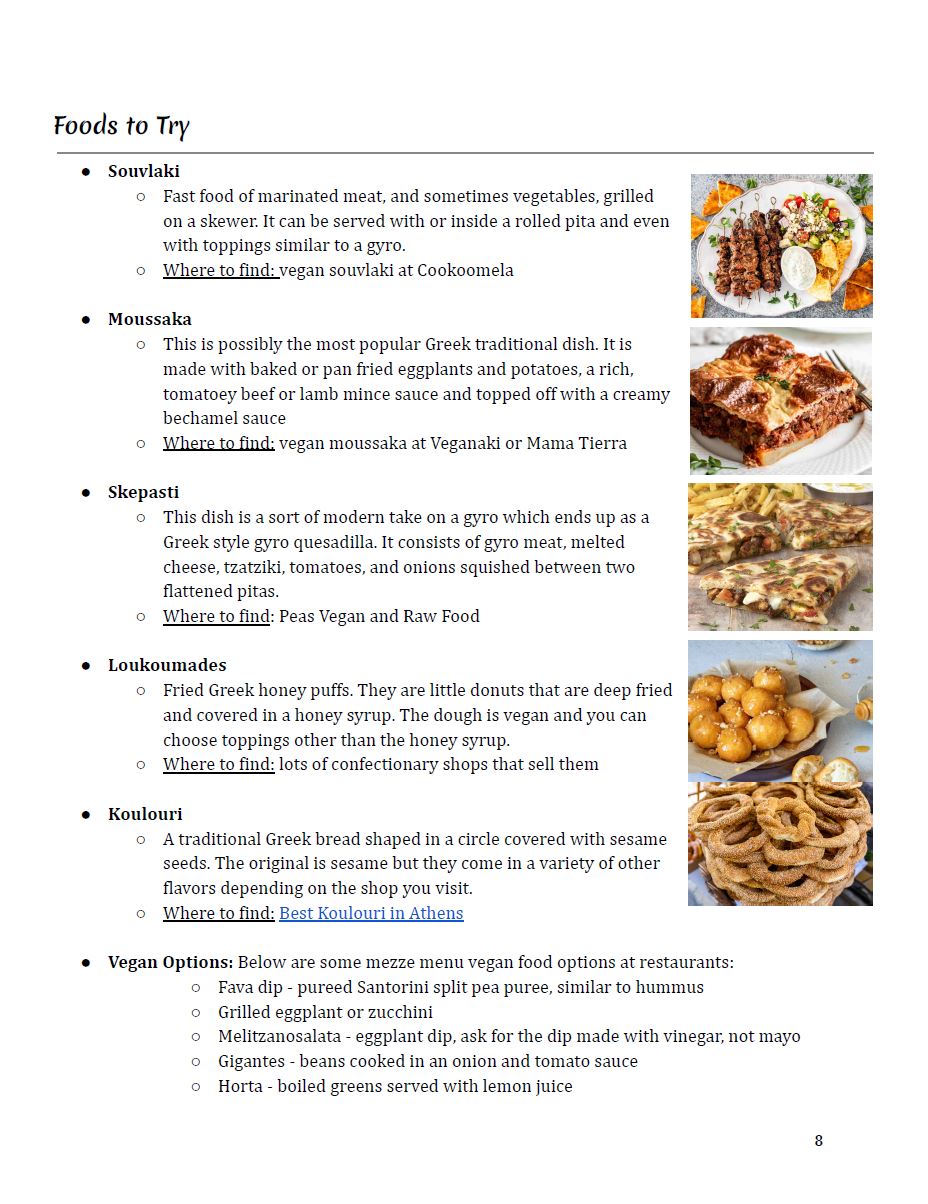
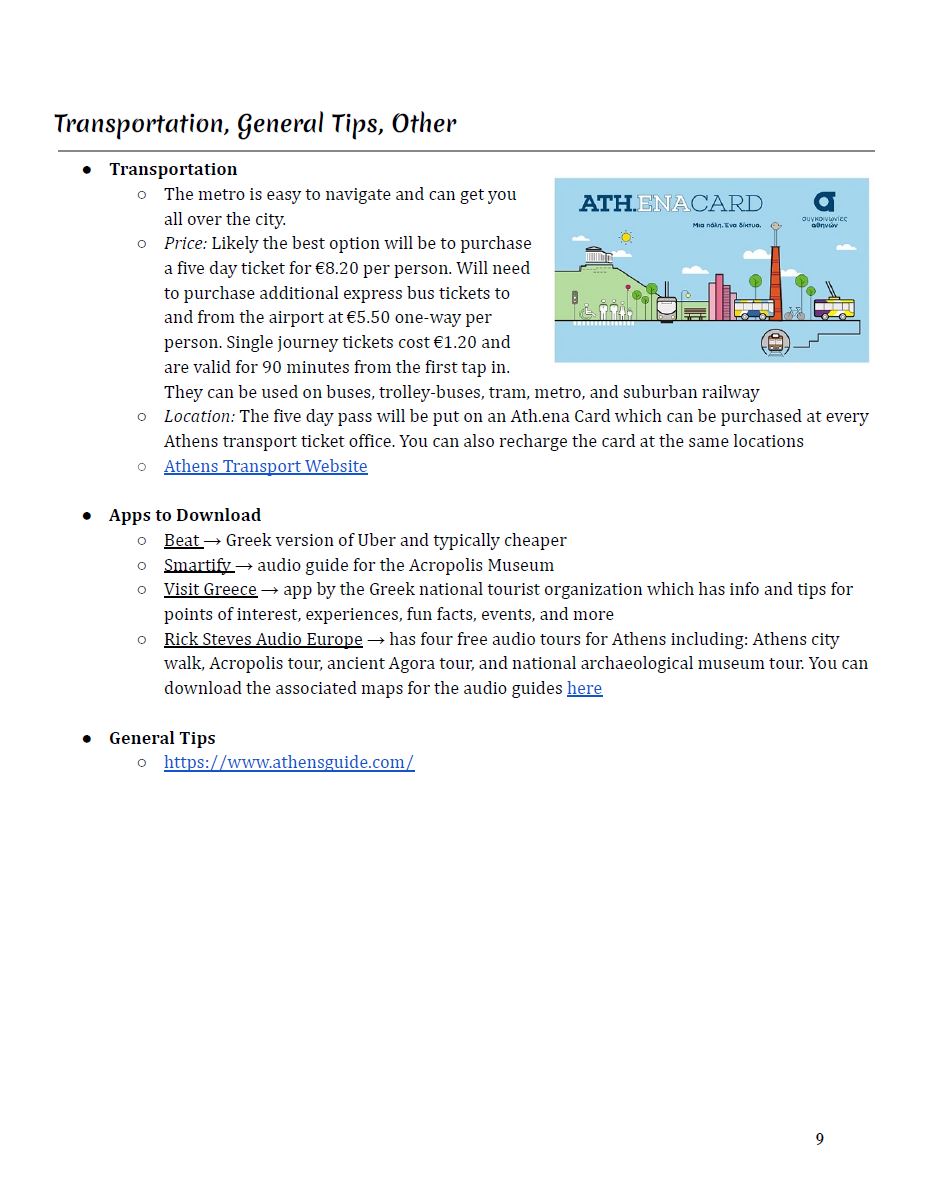
In addition to my folders of country research, I have ‘saved’ lists within my Google Maps. As I conduct my research (and whenever I receive recommendations from other travelers) I save locations in country or city specific lists. It makes your trip go so smoothly when you already have most things saved on a map with notes about them.
Conclusion
There you have it, that’s my in depth guide on how I research destinations that I intend to travel to. You can use this information to plan any duration of trip, but it’s especially useful for long-term trips. While researching your destination is an important step in planning your trip, there are many other topics that you need to look into when planning a trip. Check out my intro to planning a long term trip if you want to see everything I recommend researching!



 Courtney Plans Travels
Leave a comment