
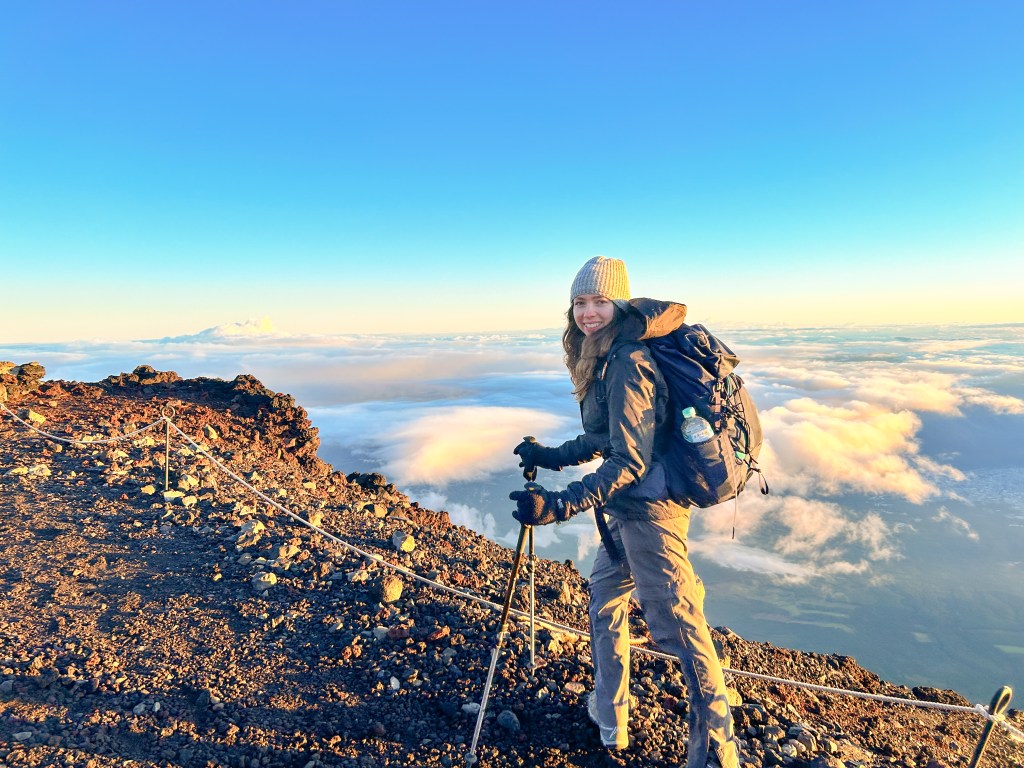
I recently climbed to the summit of Mount Fuji in Japan. I spent months planning the climb to ensure that I’d be able to do it during my trip to Tokyo. It was an incredible experience. I climbed on the very last day of the climbing season (September 9-10) with my brother. We stayed overnight in a mountain hut so that we could watch the sunrise from the summit. Here’s a little more about my experience:
- The Journey to the Mountain
- Subashiri Trail – Ascent to Station 7
- The Mountain Hut
- Subashiri Trail – Sunrise Summit
- Subashiri Trail – Descent
- Summary of my Thoughts & Experience
The Journey to the Mountain
The climb up Mount Fuji is separated by a series of mountain huts called stations. All of the climbing trails start about halfway up the mountain at Station 5 and go to the top which is Station 10. After quite a bit of research, my brother and I decided to climb via the Subashiri trail. My brother had climbed Mount Fuji twice before up the more popular Yoshida trail and I wanted to avoid the crowds.
We drove to the parking lot for the shuttle to Subashiri Station 5. If you end up taking this shuttle near the Michinoeki Subashiri rest station, I recommend using the free bathroom at the rest stop before you take the shuttle. The bathrooms already cost ¥200 once you get to Station 5.
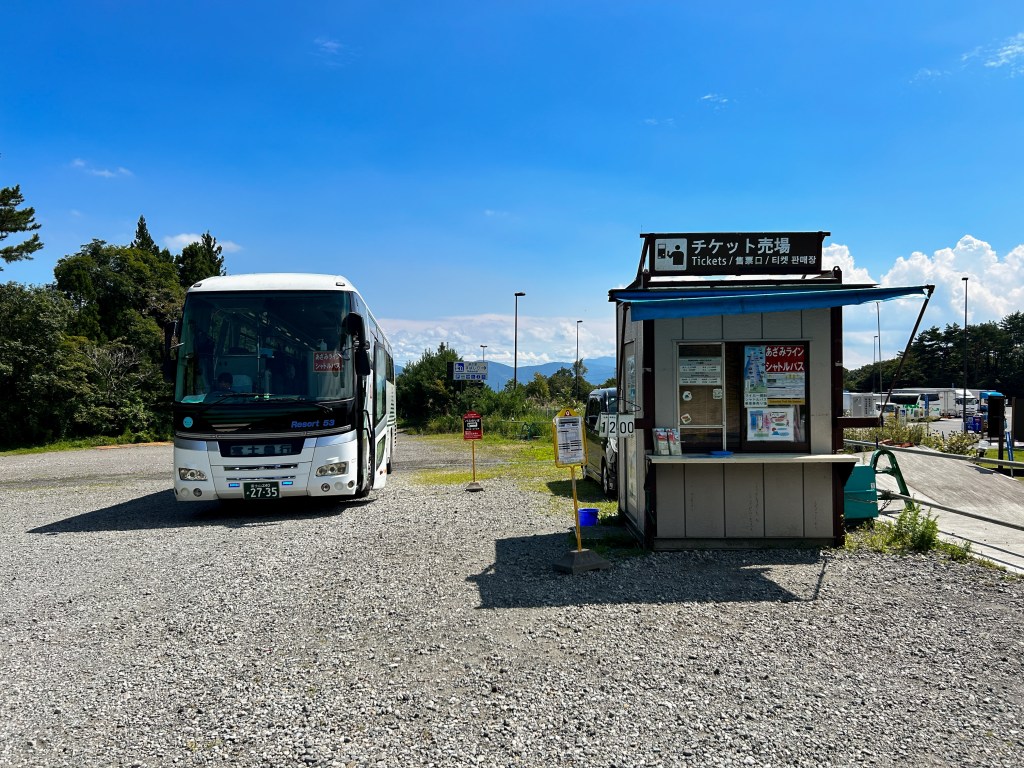
The shuttle was quite comfortable and air conditioned and every seat had a large plastic covering to protect it from the dirty clothes and equipment of climbers. The ride up to Station five took about 25 minutes and was switchbacks the whole way up. I was surprised by how green and forest-y it was around us. I even saw some locals along the ride who were gathering mushrooms!
Once the shuttle dropped us off the weather was already noticeably colder. I actually started off wearing a pair of shorts and a long sleeve shirt; however, I decided to change into my hiking pants at this point due to the colder temperature. At the fifth station, there is a bathroom, a restaurant, a shop, and some vending machines. Here you can order a meal, from a very large menu with Mount Fuji themed foods, and sit outside at one of the many wooden benches.
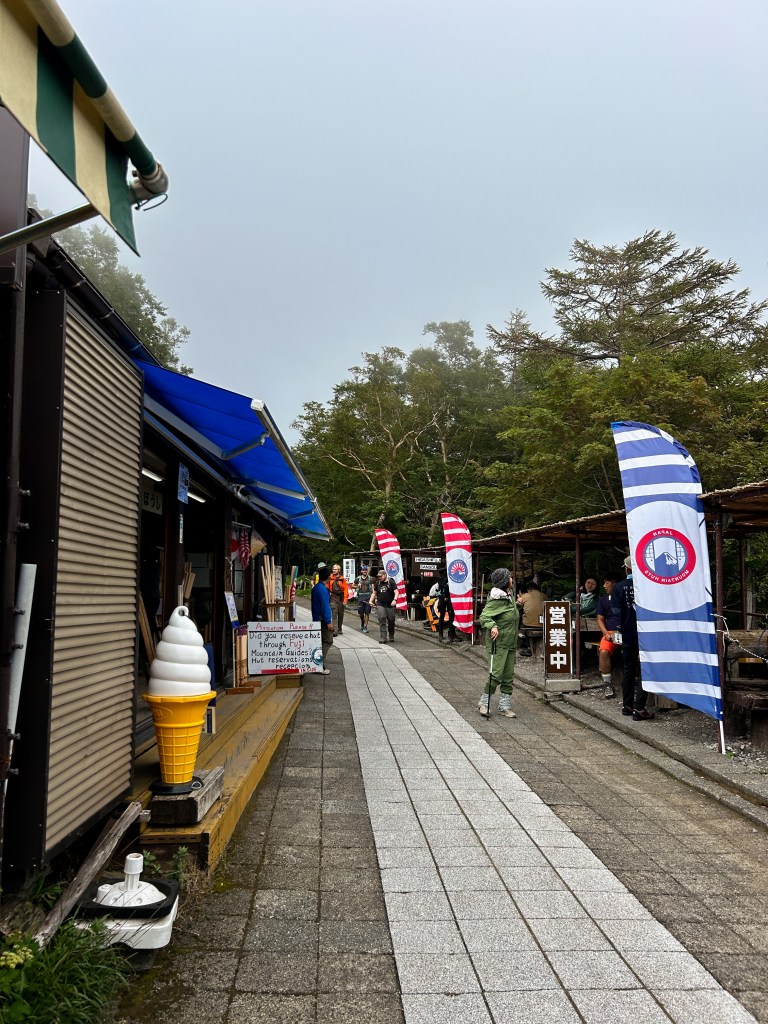
At the shop you can purchase all sorts of souvenirs, most importantly a wooden walking stick. These walking sticks come in a variety of sizes, from full on hiking pole size, to small sticks that you can hang from your backpack. Along your climb, you can purchase stamps that are burned into your walking stick at each of the stations. The walking sticks are extremely popular souvenirs among tourists. Personally I opted out of buying one. Not only are they expensive and difficult to get home, but it would just end up sitting around at my apartment so it wasn’t necessary.
It was around 12:30 so we decided to have a small lunch, some peanut butter and jelly sandwiches we brought, before starting our climb. Once we started walking towards the trail head, we had to go through a checkpoint. Here we had to pay a ¥1,000 donation for the conservation of the mountain. It’s advertised as a donation but treated like an entrance fee. Either way I was happy to pay to help preserve the mountain. We also had to fill out a registration form with our climbing plan and our contact information. Lastly, there was someone who asked to make sure we had all of the necessary equipment for hiking up (headlamp, food, warm clothes, etc.). After this, we were able to start our ascent!
Subashiri Trail – Ascent to Station 7
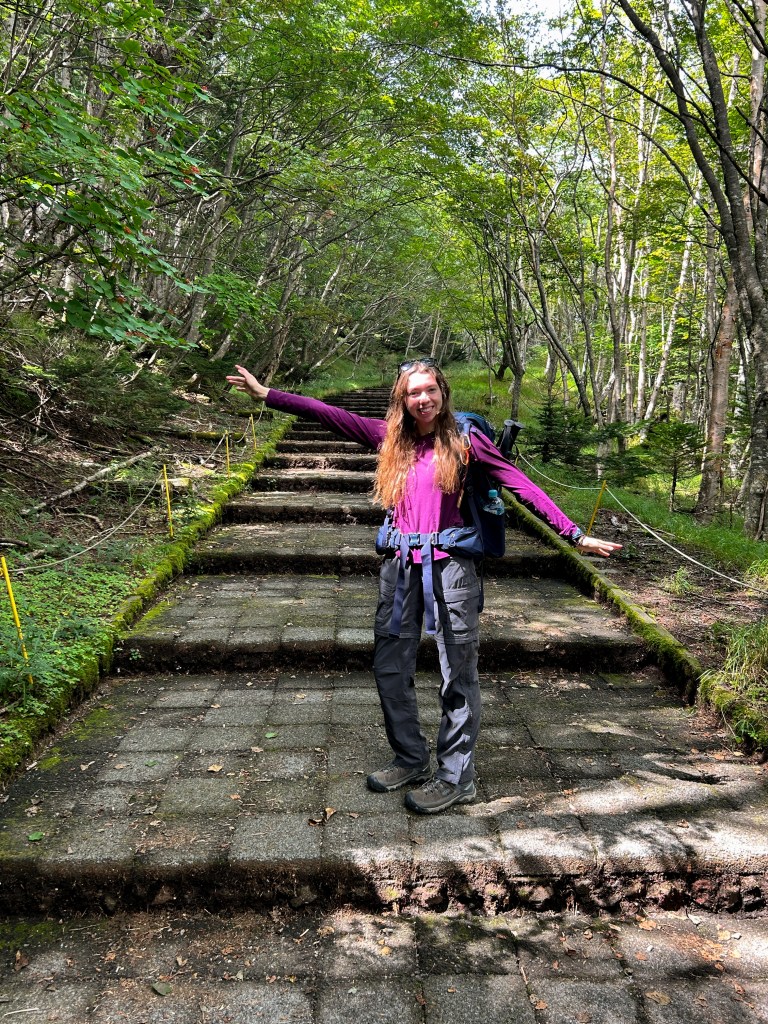
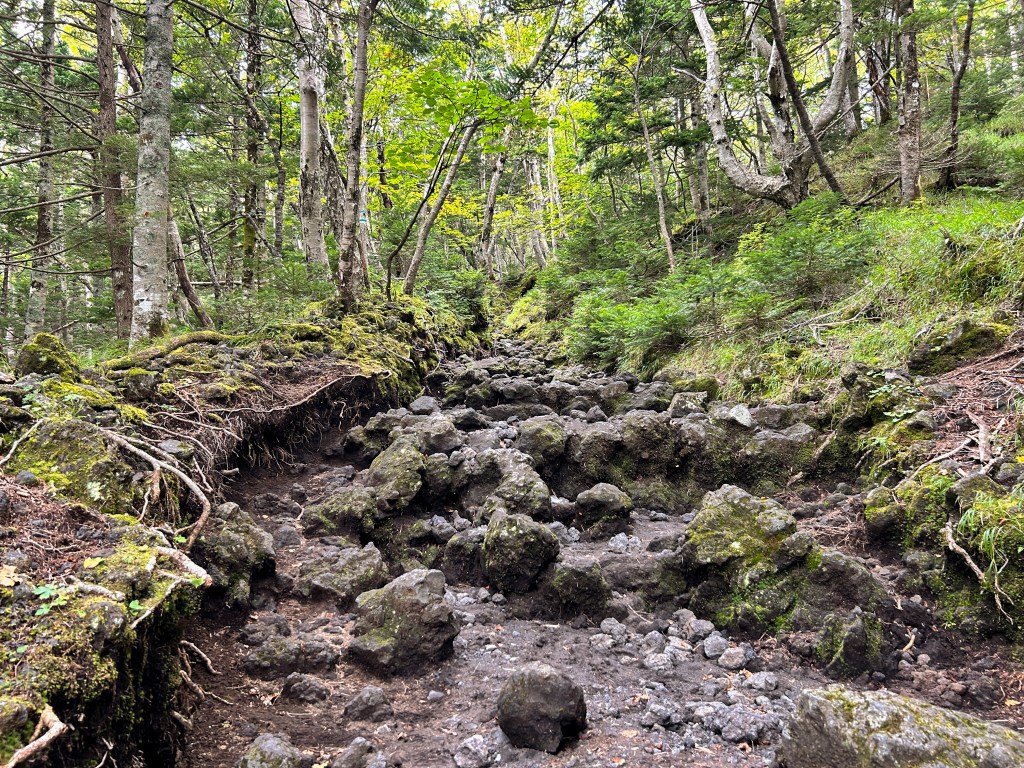
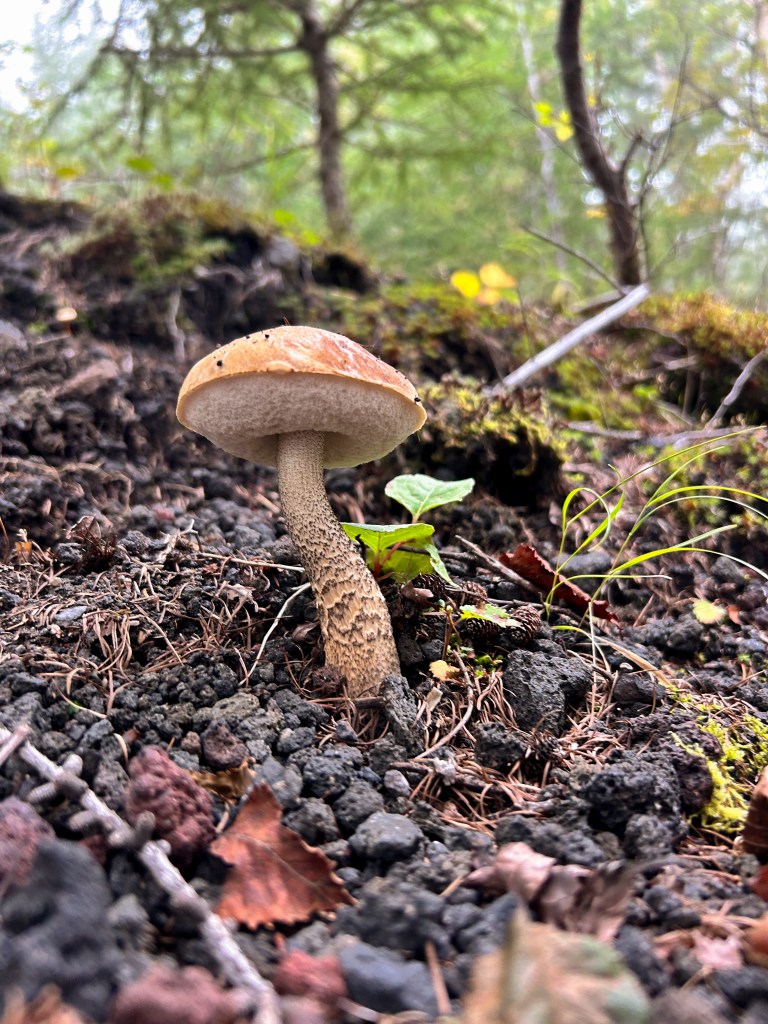
The beginning of the Subashiri trail is covered in lush green forest. The starting altitude is about 2,000 meters and you can’t even see where you’re going (the top of the mountain) from here. The trail is pretty rocky and wet, which can also be slippery. I didn’t see any animals, but I saw plenty of insects and little mushrooms. The trail went on like this for a surprisingly long time, about an hour of dense forest, before starting to thin out. I was expecting it to be volcanic and barren the majority of the climb so this was a pleasant surprise. The weather was perfect in this section and there was lots of shade from the sun. We barely saw anyone on this trail, which was also a huge surprise.
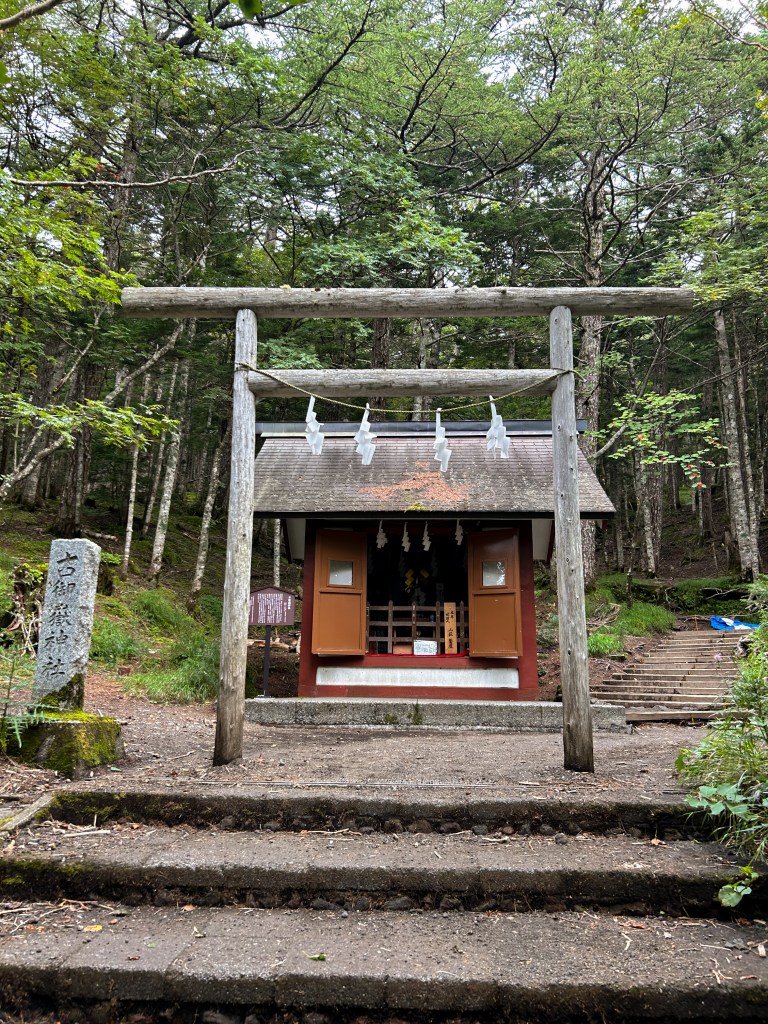
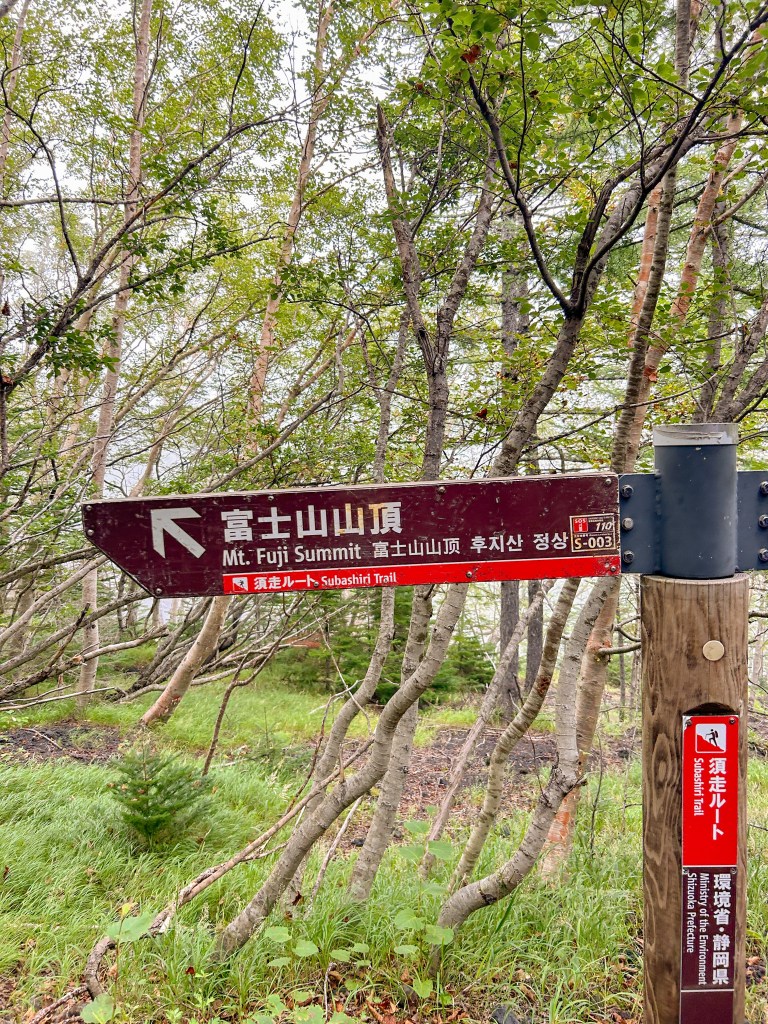

We made it to the new Station 6 around 14:30 and took a short break. Even from this point there was a pretty nice view as you are almost to the top of the tree line. You can see some of the lakes below and the land, given there’s good weather. After a short break, we decided to trek on. From here on out the trail wavers between having trees and being rocky and devoid of large plants. We stopped at the original 6th Station for another break. I knew that our mountain hut was at Station 7, so once we hit the original 6th Station, I was feeling pretty good. The sun was just about to go behind Mount Fuji for the day and the sky was really clear. We were also high enough that we could finally see the summit of the mountain in the distance. The signs said that Station 7 was about 1.2km away.
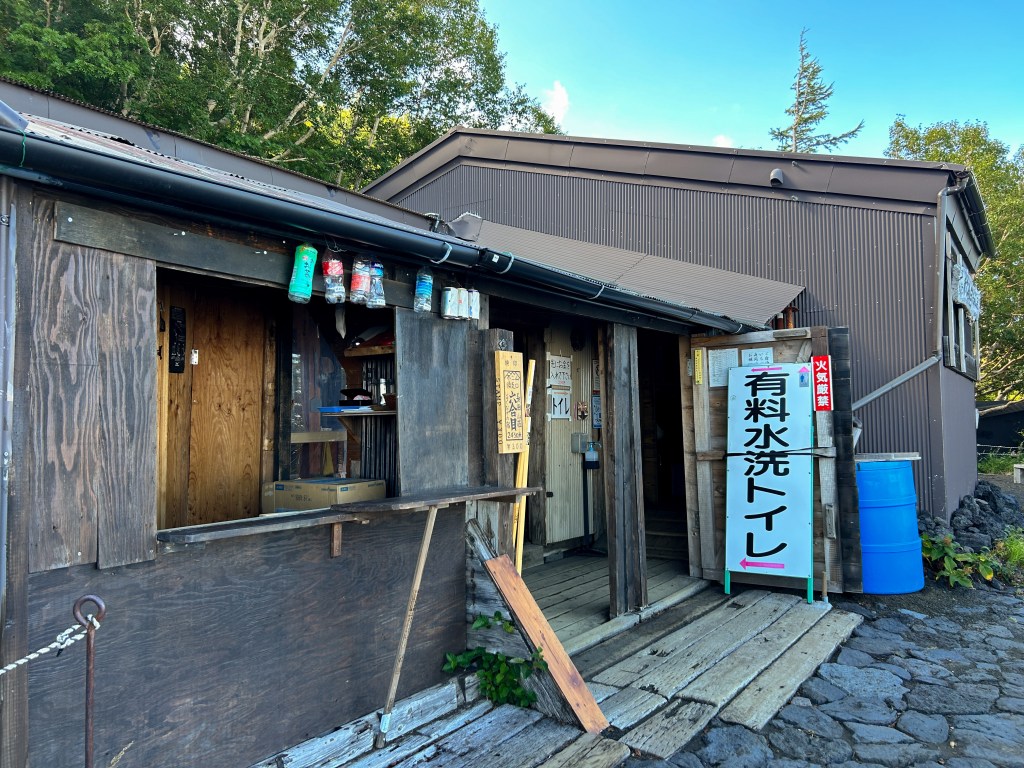
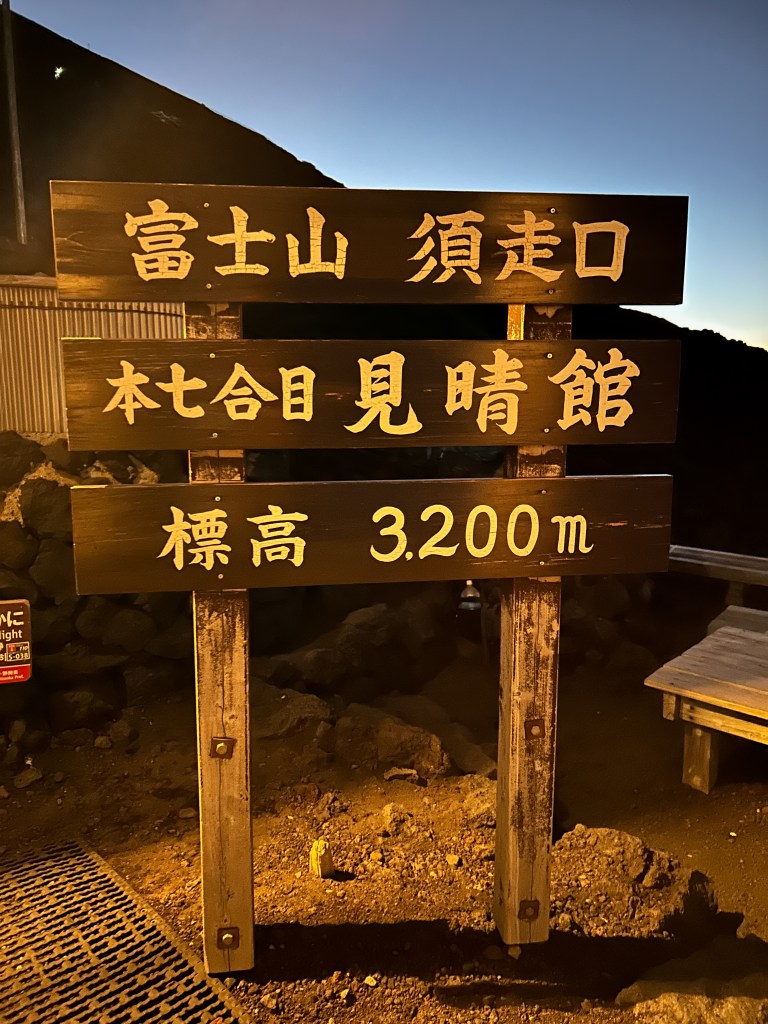
About an hour later we arrived at Station 7. I was starting to feel it in my legs and my pack was getting quite heavy. I waited for my brother to catch up and then we realized that this certainly was not where our mountain hut was. Our mountain hut was another 800 meters away at the original 7th Station, according to the sign. I know, 800 meters doesn’t sound like much really. But let me tell you, this was the most difficult 800 meters of the ENTIRE climb.
The terrain is super sandy, and it’s pretty deep, so for every two steps forward, it feels like you’re taking one step back. And to make it worse, there are no more trees to block your view. So as soon as I started this section, I could already see the end goal very far up the mountain. It only took about 45 minutes for me to complete this section, but it surely felt longer. I was moving at the pace of a turtle. But when the going gets tough, all you can do is put one foot in front of the other.
The Mountain Hut
Arrival and Views
After this exhausting section of the climb, we finally made it to our mountain hut. We stayed at the Miharashikan Mountain hut. Upon arrival, we went to the check in area through a sliding door. It was pretty hectic once we got inside. The entrance section, where you can wear your outside shoes, is very small. The way that the door is setup, me and my brother were blocking the entire entrance while trying to check in. Since I booked online in advance, I gave the worker my name. She very quickly explained to me where the bathroom was and had me mark what type of breakfast I’d be having (sit down or to-go). At the same time this was happening, another worker to our left, on the elevated no shoes area, was asking us for our hiking poles. She was also trying trying to get us to take off our hiking boots and go up to the no shoe area. And to top it off, people were trying to get in and out of the entrance area that I was blocking. It was a bit stressful and unorganized to say the least.

Our hiking poles were bundled and placed on a rack, and there was a cubby area to put your outside shoes. Since the bathroom is outside, there are lots of rubber slippers to wear if you go outside, instead of putting your boots back on. There is no designated area for backpacks, so they just kind of go wherever they fit around your sleeping area.
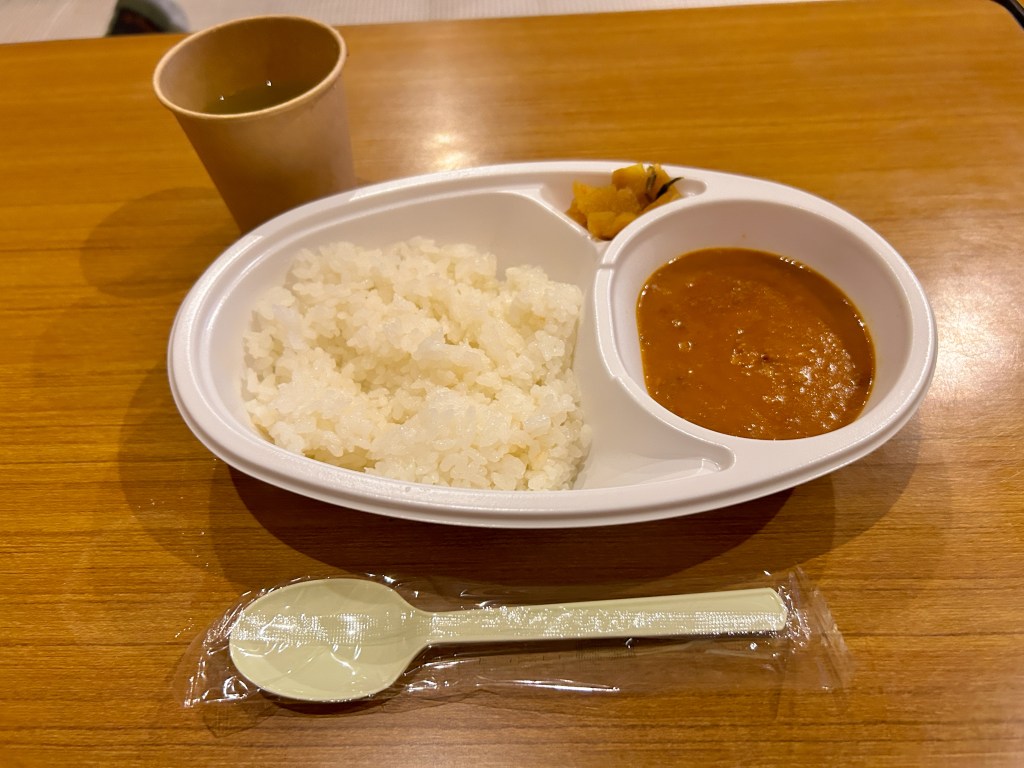
After the difficult section of the hike immediately before this, I wasn’t feeling fantastic. I had a headache and was really tired. We were instructed to sit on tatami mats on the ground at a small table and wait for them to bring us dinner, which was a choice of either meat or vegetarian curry and rice. I didn’t end up eating the curry because I had a feeling it wasn’t vegan. Instead I had some onigiri that I had brought. But my brother did eat the curry and said it was pretty good.
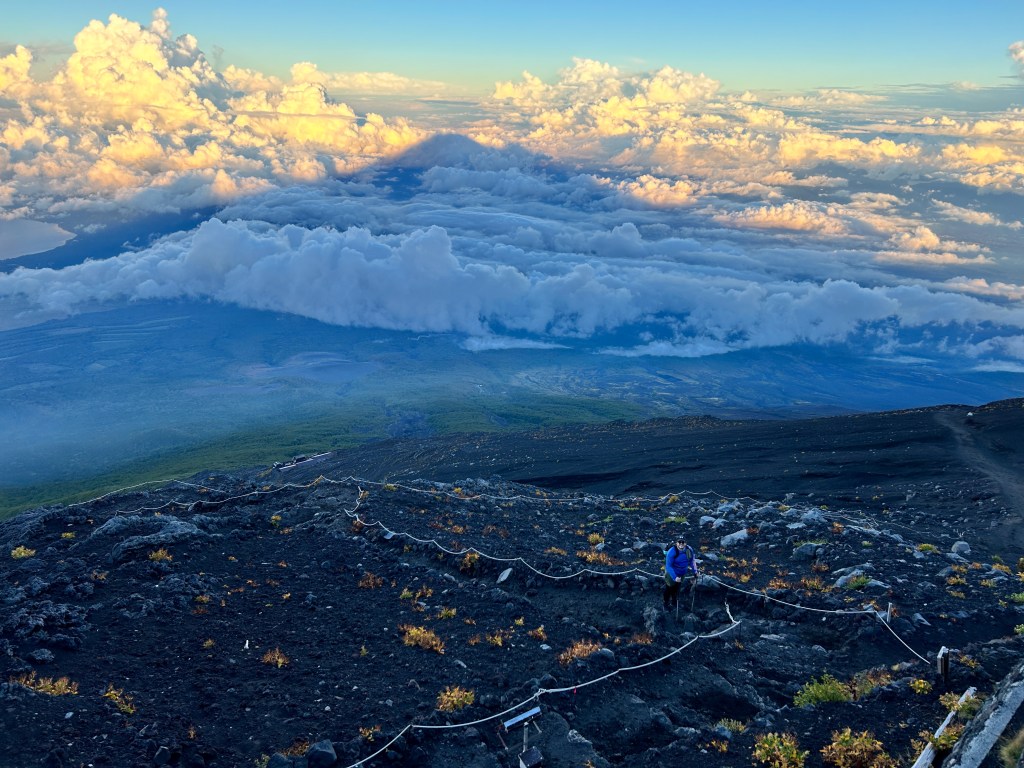
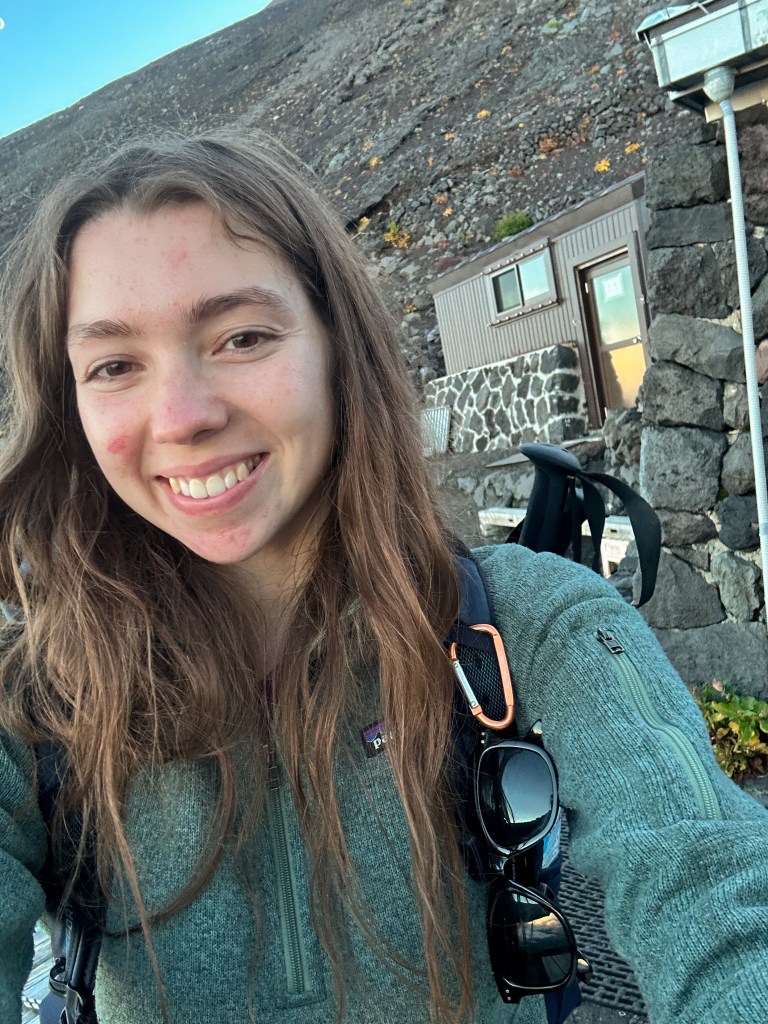
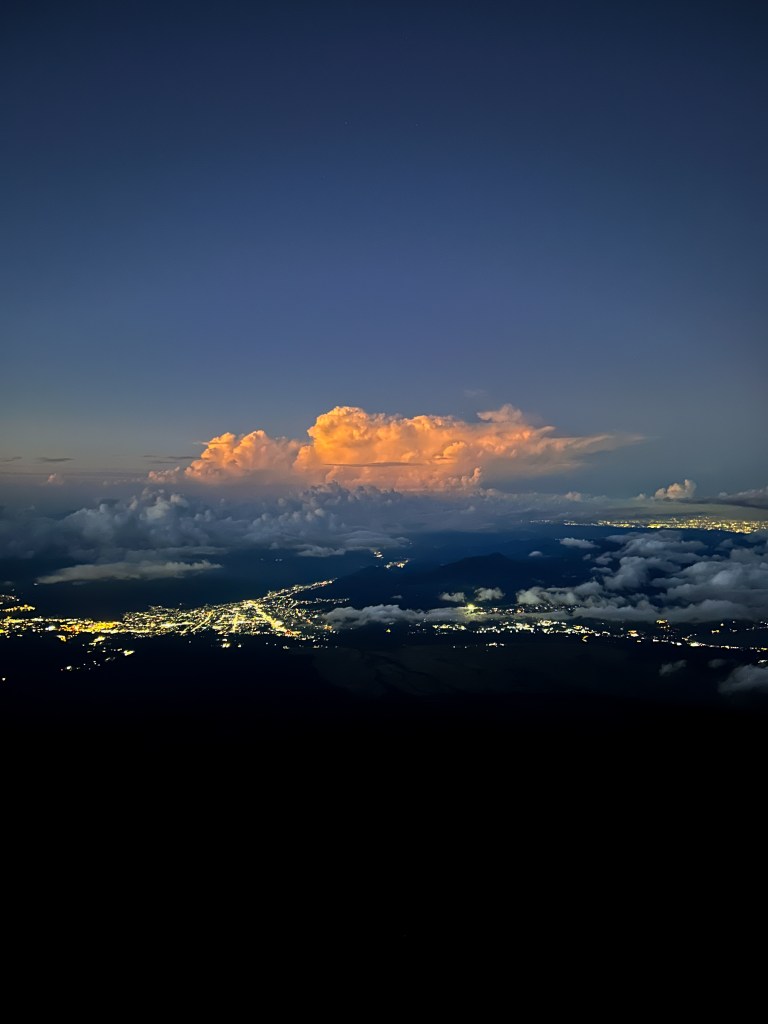
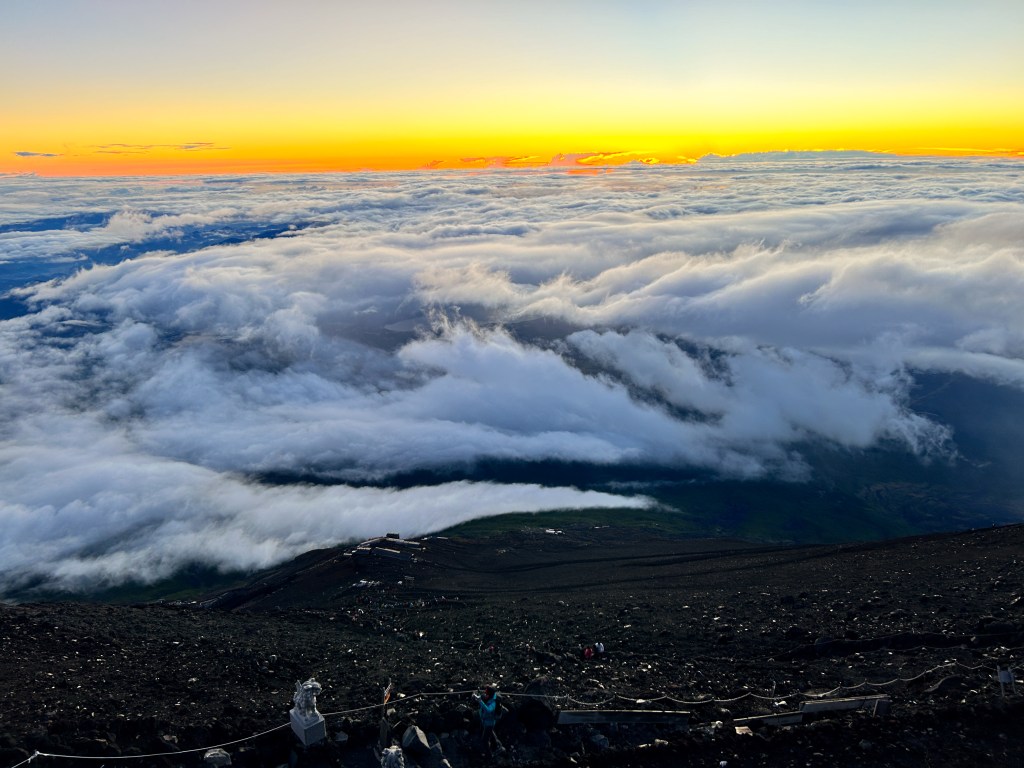
After dinner we went back outside to check out the view. The sun had fallen behind the mountain (behind us) but it wasn’t dark yet. We had the most amazing view of the land below, with the shadow of Mount Fuji hovering over it intensely. There was a climbing guide in the same area we were sitting and he mentioned that in the roughly 20 times he’d climbed Fuji this season, he hadn’t seen the shadow of the mountain with this view until today (the last day of the climbing season). So we were really lucky to have such excellent weather. Later in the night as it became darker, the cities below lit up with twinkling lights and you could even see Tokyo far off in the distance. In one area of clouds, there was a lightning storm that you could see brewing. It really was an excellent evening.

Sleeping Area
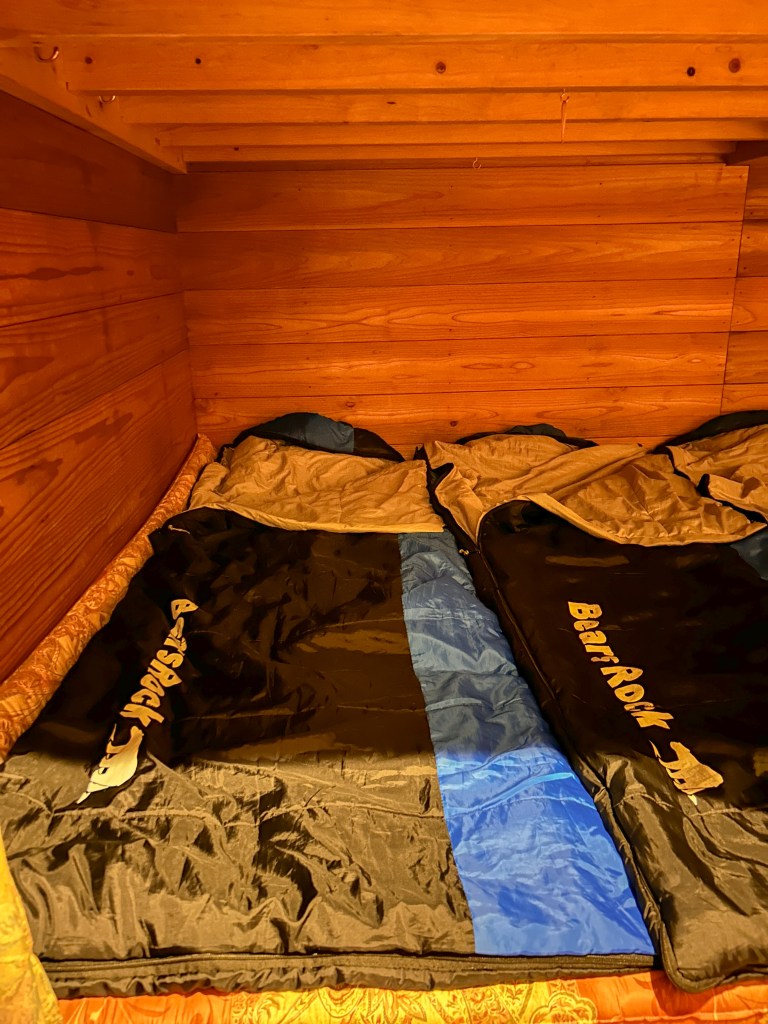
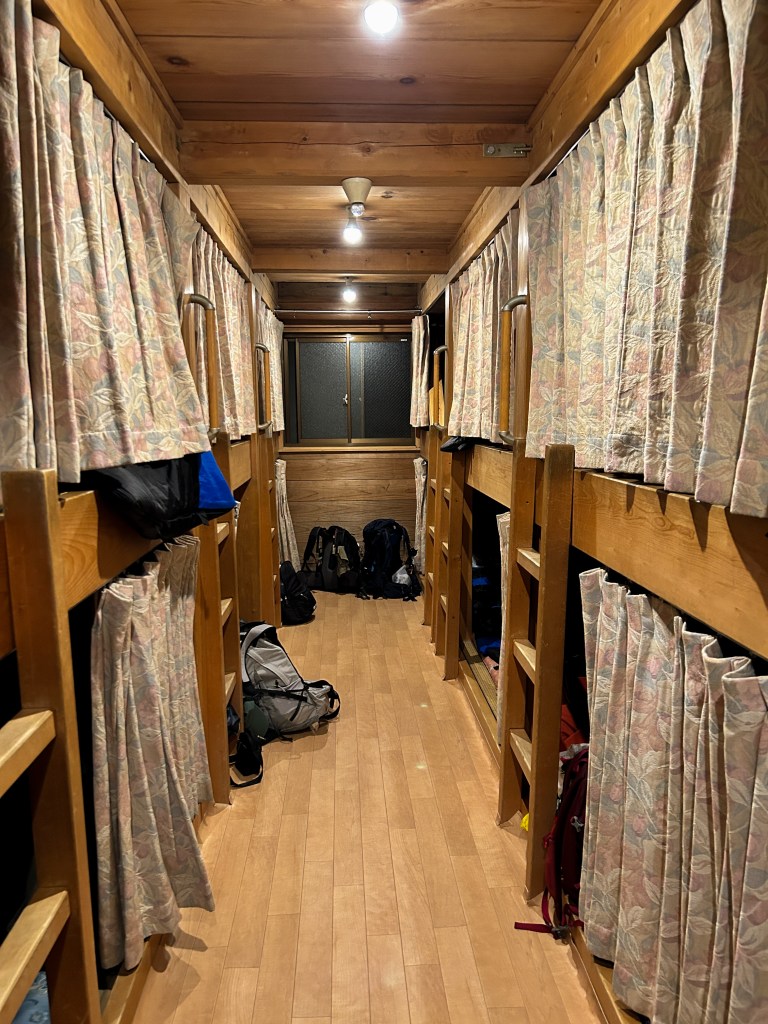
We decided that we wanted to leave at around 02:00 the following morning so it was time to try and get some rest. The sleeping area of the mountain hut consists of upper and lower “bunk” type bedding. The workers at the hut assign you a sleeping bag and I believe they try to arrange it so that men and women from different parties are not next to each other (Ex://a female likely won’t have to sleep next to a male that they don’t know). We ended with a pretty good spot at the far end of the room on the bottom level. There are no mattresses or individual bunks. Instead you sleep on the floor on a thin cushioned mat with a sleeping bag on top. You also get a tiny ‘pillow’ which is more or less a bag of dried beans in a pillowcase. It was so uncomfortable that I opted to just use my pullover jacket as a pillow instead.
The sleeping bags are lined right up next to each other to maximize space. So don’t expect much privacy. There are some hooks here and there that you can hang a jacket or other items from, but it depends a lot on where you’re located in the long line of sleeping bags. There are curtains on the bottom entrance to the sleeping areas to keep it dark and lights of the sleeping area are turned off at 20:00.
In addition to there being little to no privacy, don’t expect to get a good night’s rest. Anytime someone moves around in their sleeping bag, it makes a loud noise. All night people will be getting up and down to use the restroom. And in my experience, there was a large group of people who got up at 12:00 to begin their climb to the top (despite it only being a 2.5 hour climb to the summit). They spent about 20 minutes zipping and unzipping bags, crinkling plastic bags of things, shining lights, and generally being really loud. If you haven’t stayed in a hostel or shared communal space before, please pack your things the night before so that you can minimize your disturbance to others if you’re leaving early in the morning.
Between the noises, a headache and nauseous feeling (potentially from the altitude), and the uncomfortable temperature of the room, I didn’t get much sleep. I was a bit worried about the rest of the climb up the mountain because I was so tired from the section earlier in the day. Nonetheless, we got up around 1:50, grabbed a to go breakfast, and started our ascent to the summit.
Subashiri Trail – Sunrise Summit
Sunrise was scheduled for around 05:20, so we left for the summit at 02:00. It was supposed to be 2.5 hours to the summit from the hut, and we wanted to be at the top before the sun was fully risen.
We climbed for about 40 minutes on the Subashiri trail in the dark. The trail was very well marked so there were no problems knowing where to go. There were a couple of people behind us and one large group from our hut that we passed along the way. Other than that, the trail was very quiet. After 40 minutes we made it to Station 8. And this is where things got busy. The Subashiri and Yoshida trail merge at this point. There were huge groups of people in the areas outside of the bathrooms and mountain huts waiting for their tour guides. We took a quick break and then continued on the merged trail.
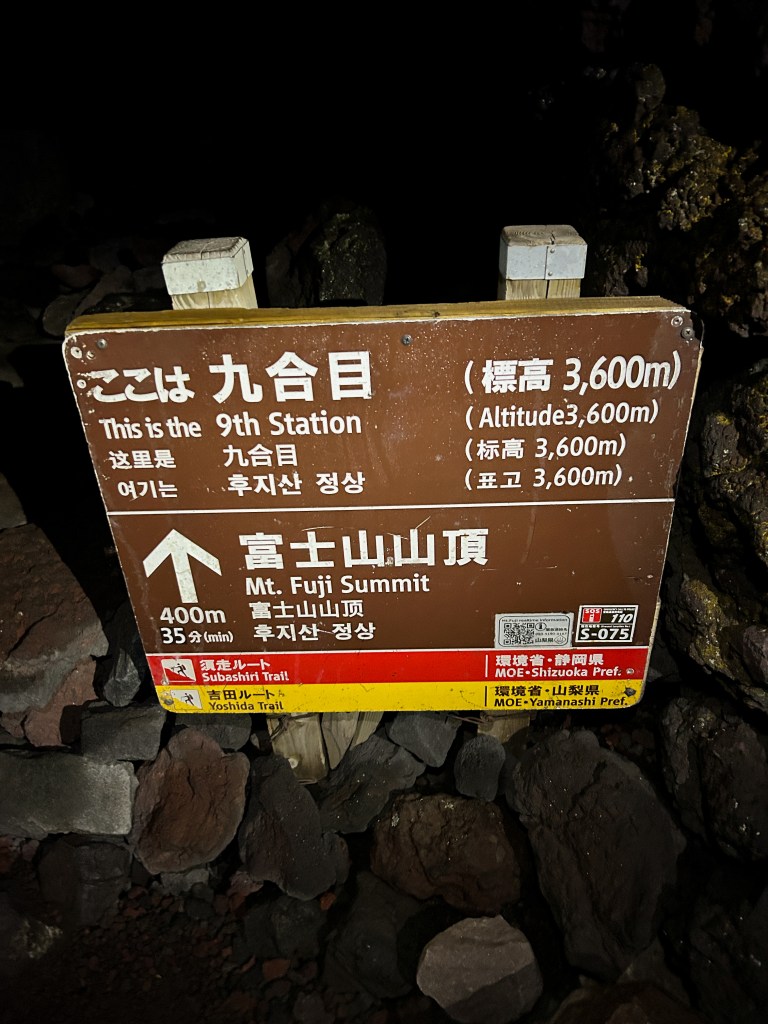
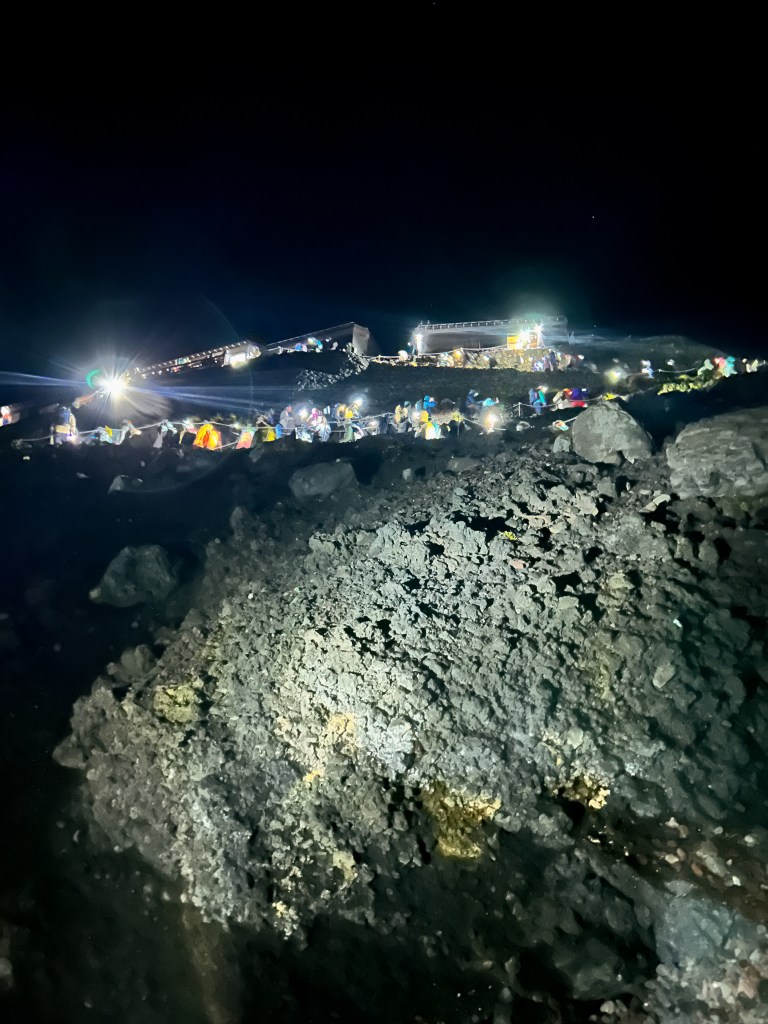
Immediately, there were people in front of and behind us with no gap in between. There was a solid line of people with headlamps slowly zig zagging all the way up the mountain. We moved incredibly slow so there was no need to take any breaks. You have to be really careful because in addition to the rocky and increasingly steep terrain, a lot of people use hiking poles but have no sense of the people around them. I kept my distance between the people in front of me and still cut it close to being poked in the face with a hiking pole. The distance to the summit from Station 8 isn’t that far, and in an ideal setting wouldn’t take very long. But the bumper to bumper traffic ensured that it took an hour and forty minutes. After seeing the craziness of the Yoshida trail, I was so happy that I chose to take the quiet Subashiri trail on my climb.
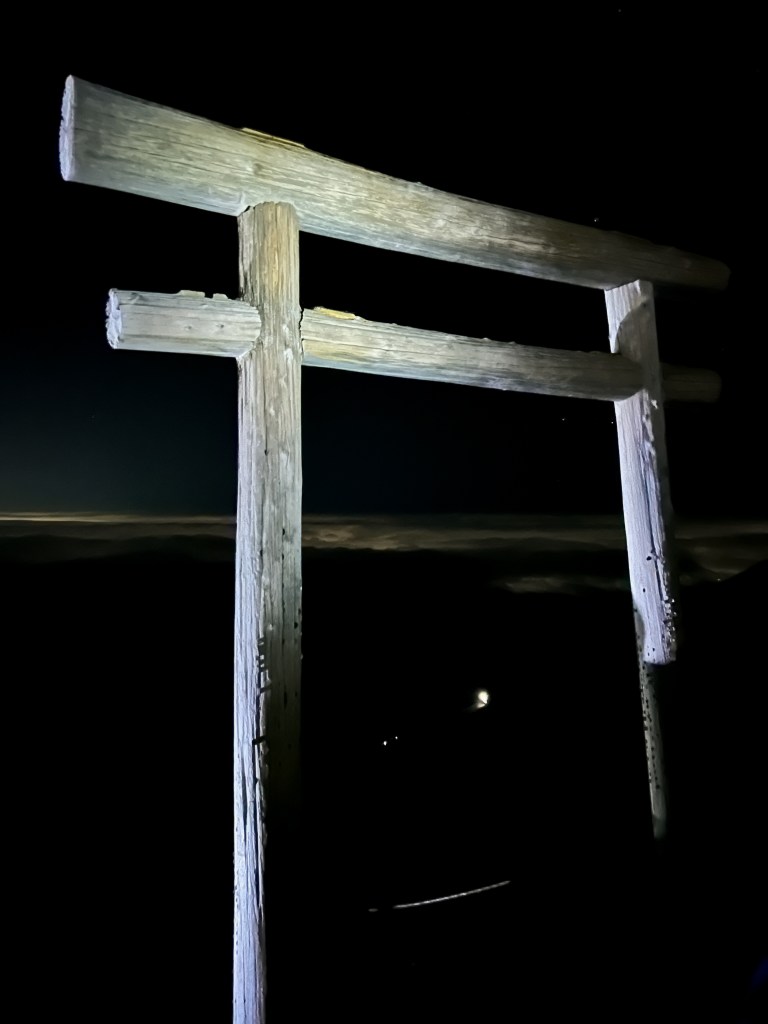
There are a couple of tori gates that you pass under when you get near the summit. And then there is one final tori gate with some komainu statues in front of it. Finally we made it to the top! The sun was just starting to show signs of existence in the form of a narrow strip of sorbet orange and an ombre blue sky. We found a seat and watched the show.
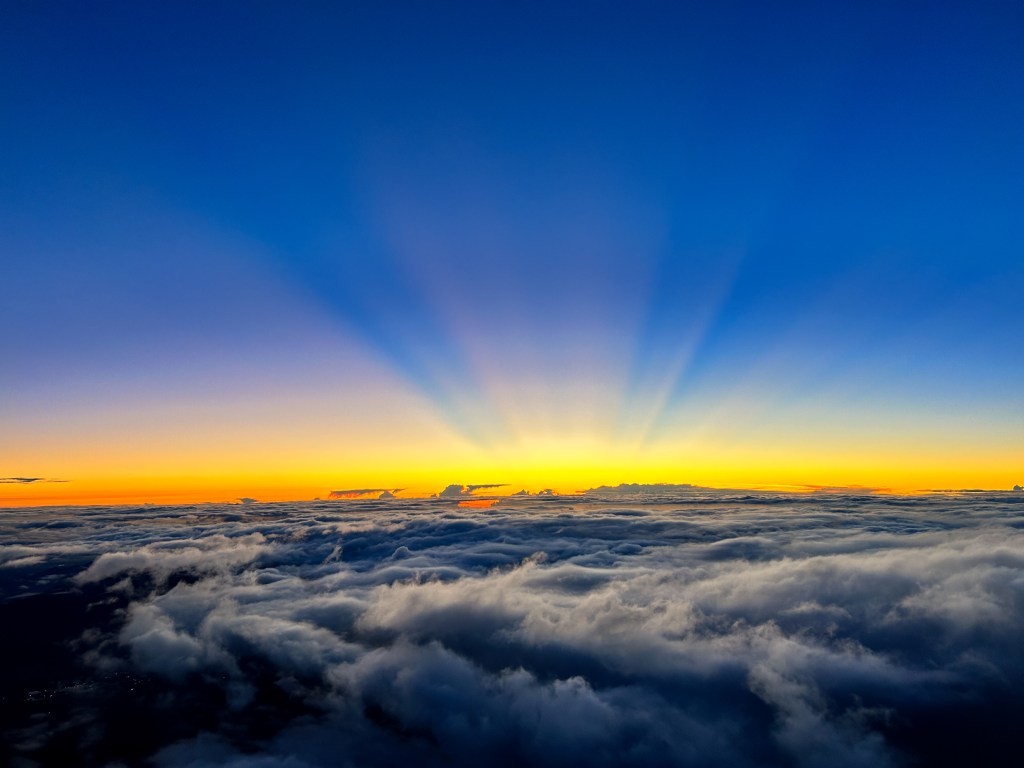
Again we were so incredibly lucky with the weather on our climb. The sunrise was beautiful – it wasn’t too cloudy or foggy. It was quite chilly and very busy at the summit, but that was to be expected. Once the sun was above the clouds, we took a walk around the area at the top. You can actually walk around the entire rim of the volcano, though I didn’t do this. I was content to walk around about half of the rim area and take in the views.
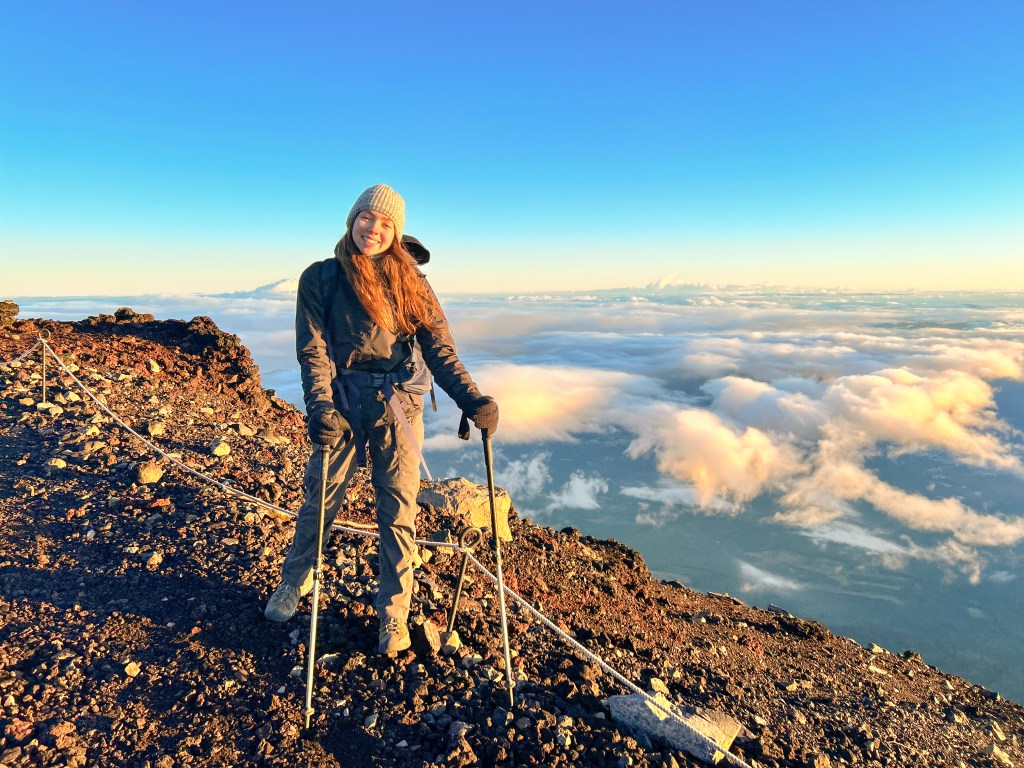
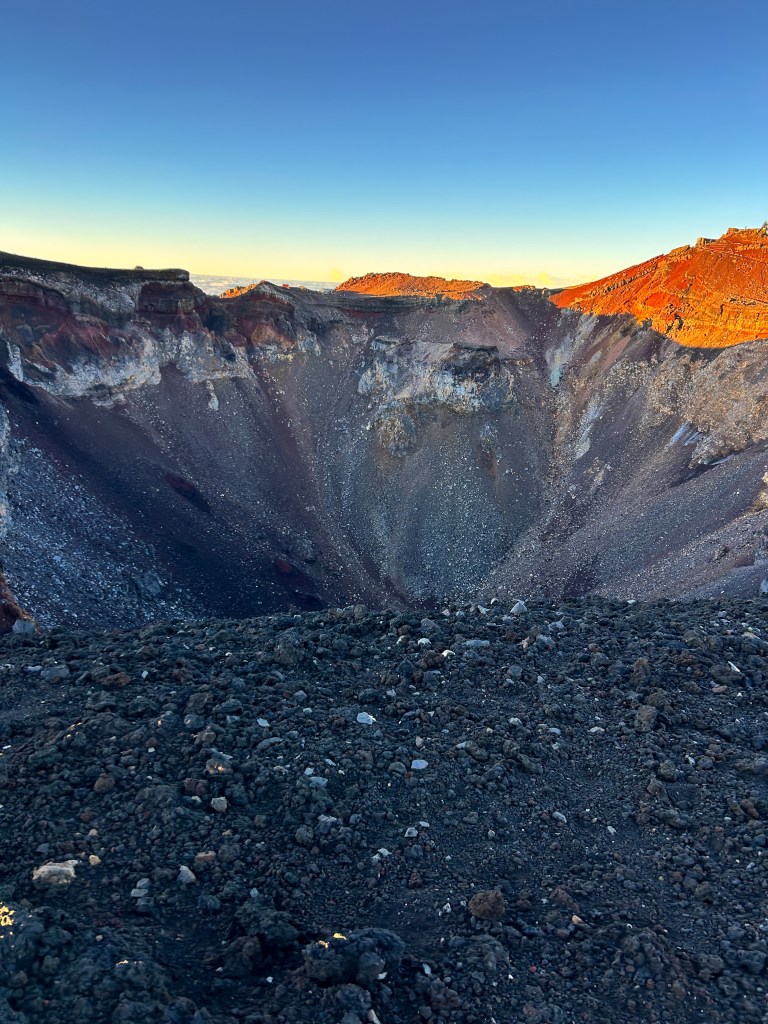
There is actually a hut at the summit that looks like it sells food and walking stick stamps. However, it was closed since it was the last day of the season. After enjoying the fruits of our labor, and some snacks, my brother and I started our descent.
Subashiri Trail – Descent
On the Subashiri trail, the ascent and descent are not the same route. From the summit back down to Station 8, the Subashiri and Yoshida trails are merged, but on a one-way downhill route. Where the ascent was rocky and sort of like walking up very uneven steps, the descent is almost entirely black volcanic sand. The trail is incredibly steep and slippery. It was much scarier going down than up. The descent in this section consists of very long, very straight switchbacks. It’s really helpful to have hiking poles when going down this kind of terrain.

Once you get to Station 8, the two trails split again. For the section from Station 8 to Station 7, you descend on the same trail you ascended. This section wasn’t too bad. Although right before Station 7 there was a section of very slippery and sharp rocks that were not easy to go down. My brother actually fell and bent his hiking pole in this section.
By the time we made it to the original Station 7, where our mountain hut was, the weather had started to take a turn. Fog was rolling in and there were no longer clear skies. In fact, in the same spot I witnessed a beautiful sunset the day before, I could now only see a sea of fog.
From the new Station 7 almost all the way down to Station 5 is a separate descent trail. And this is the second worst section of the entire trail, in my opinion. The volcanic sand became deeper and steeper. This is where our gaiters came in handy because the sand was above the top of my boots at points. With the foggy wet weather, you couldn’t see more than 20 feet in front of you. There are no mountain huts and no signs along the way telling you the distance or time to the bottom, only signs stating that you are on the Subashiri trail. The sand is so deep that you basically have to semi-run down while digging your heels in the sand each step so as not to fall forward. It was almost like skiing but in sand instead of snow. And mixed in the deep sand are large rocks that you will jam your toes into if you don’t watch where you’re stepping very carefully.
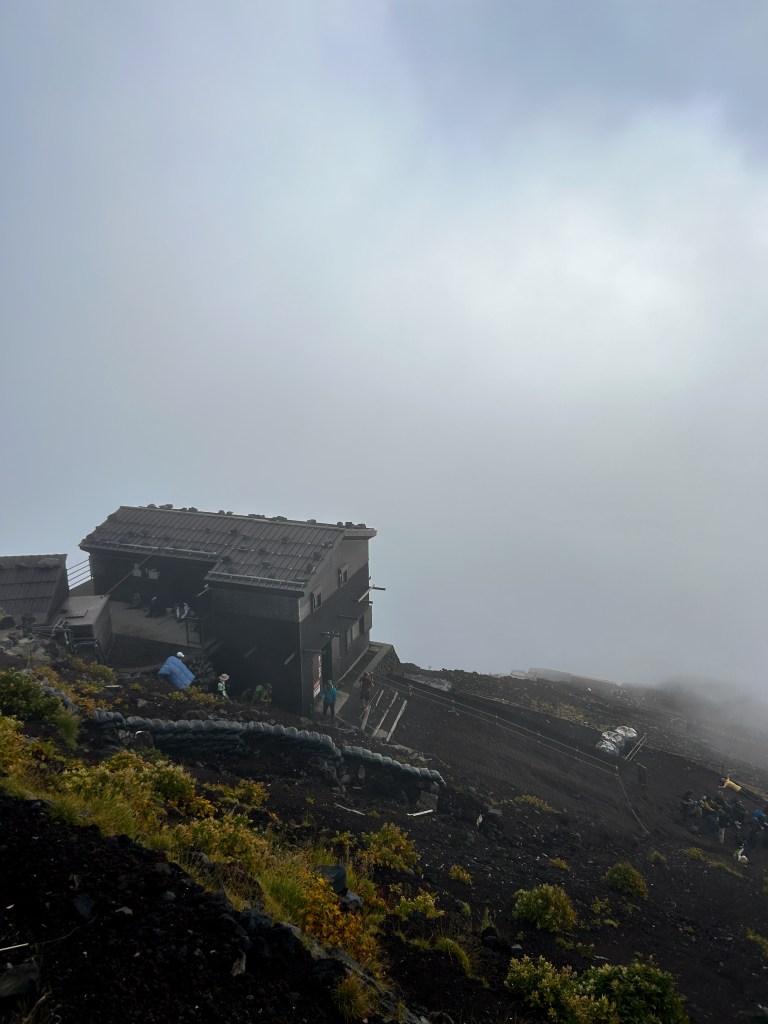

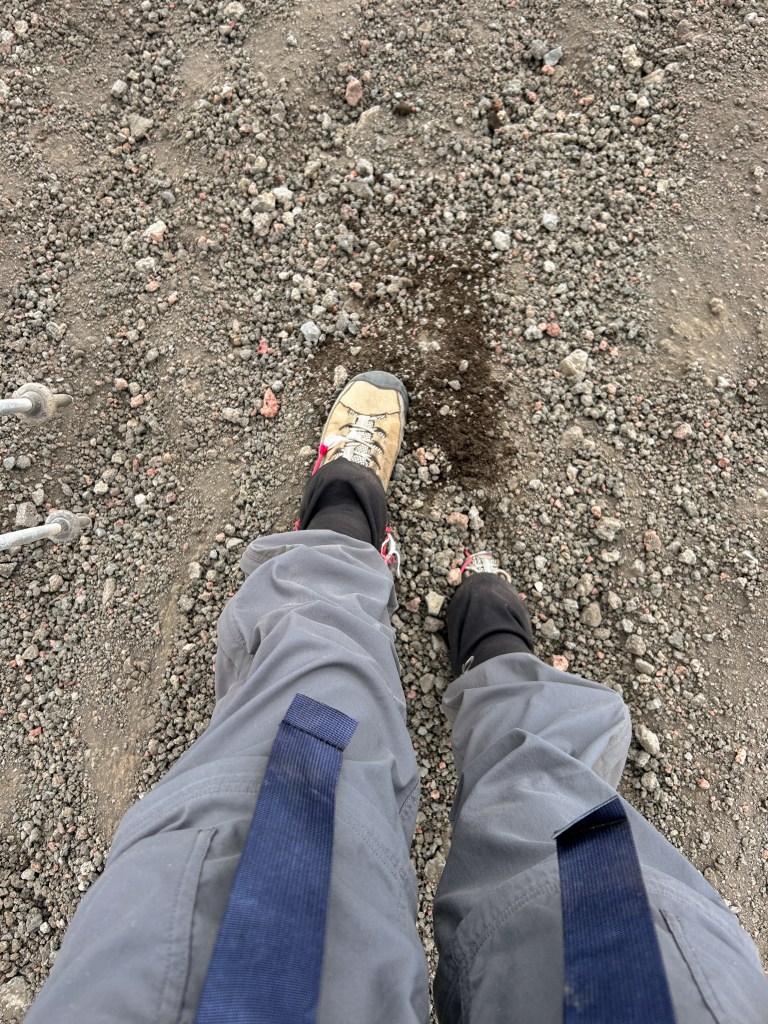
Besides the earlier fall where my brother took one hiking pole out of commission, he had fallen again and ripped his pants, and then had stubbed his toe on a massive rock. Basically, he was hobbling down this seemingly never ending mountain. There were very few people along the trail and those we did see disappeared quickly in the thick fog.
At one point I saw an unofficial sign that I quickly did a photo translation on which said that the next mountain hut was 5 minutes away. Well that was a clear mistranslation because after having some hope we walked more than 30 minutes with no signs of life. Needless to say, the descent really was not a fun experience. Eventually we made it to a “hut” (just a dirty bathroom and some guys selling water) and took a break to eat lunch. From here, you finally entered the forest section of the trail before finishing back at Station 5.
It took us a total of about 7 hours to ascend, and 6 hours to descend for a total of 13 hours. The descent really should have taken about half of that time but we had some injuries to deal with.
Summary of my Thoughts & Experience
- Subashiri Trail: I think this was the perfect trail for climbing Mount Fuji. I was so surprised by the lack of people on this trail. I know that the Yoshida trail is packed with tourists the entire climb, so that’s what I was expecting this to be. It was the exact opposite. The majority of our climb there was nobody remotely close to us, either in front of or behind us. In fact, we knew the few climbers who were ahead of us, or that we passed, because we kept crossing paths at the rest stations. Overall it was very quiet and the terrain was really nice. I would highly recommend this trail!
- Mountain Huts: As long as you come in with low expectations, these huts are perfectly suitable for the purpose they serve. The bathrooms were reasonably clean, it wasn’t too cold or uncomfortable inside the hut, and the food was perfectly fine. And there was an excellent view from the benches outside. If you want a higher chance of getting some rest, I recommend bringing earplugs and an eye mask.
- Overtourism and Preservation: Mount Fuji has been dealing with over tourism for decades. In 2024, the government imposed a series of new regulations, such as limiting the number of daily climbers, to try and combat this. Still, they had almost 3,000 climbers per day during the 2 month climbing season. The mountain is no longer a very natural place given the numerous huts, shops, and even vending machines along the route and at the summit. Many people litter and the sheer number of climbers is putting pressure on the toilet facilities and medical stations. If you want to climb Mount Fuji, please be a responsible tourist. Follow the new regulations put in place by the government, be prepared with everything you need to safely summit, stay on trail, pay for the restrooms and follow the instructions for use, and make sure to pack out ALL of your trash and any that you see along the trail.
Overall, I am really happy with my experience climbing Mount Fuji. It’s definitely not what I was expecting, but it was a pleasant experience. I do think that if I had taken the Yoshida trail, I might have felt differently. If you want to climb Mount Fuji yourself, I recommend doing some good research prior to making this decision. While I’m really glad that I had the experience, I don’t think I would climb Mount Fuji again. I didn’t know about all of the problems that the mountain is facing as a result of overtourism until after I climbed. And after I had seen the troves of people on the trail to the summit, myself included, I understood why. So please, if you are going to hike Mount Fuji, do so responsibly and respectively. If you want to read more information about climbing the mountain, check out this post:
Ultimate Guide to Climbing Mount Fuji



 Courtney Plans Travels
Leave a comment