

There are probably a couple of things that come to mind when you think of the Netherlands – tulips, clogs, cheese, and bikes may be among them. But maybe one of the most iconic symbols of the Netherlands is the windmill. If you’ve ever wanted to visit or learn more about traditional Dutch windmills, look no further than the UNESCO world heritage site of Kinderdijk. Here you can visit an entire town full of historic windmills that still run to this day. When you think of windmills in the Netherlands, this place embodies exactly what you’re imagining.
- Background of Kinderdijk
- How to get there
- How much does Kinderdijk Cost?
- Should I walk, bike, or take the boat?
- The Windmills – My Experience
- Tips & Tricks
- Conclusion
Background of Kinderdijk
What is Kinderdijk?
Kinderdijk is a picturesque village located just nine miles east of Rotterdam in the Netherlands, making it a perfect day trip from the city. Here you will find a network of nineteen traditional Dutch windmills from the 18th century. These historic brick and wooden structures allow you to take a step back in history and experience the Dutch people’s battle to thrive in a harsh watery environment.
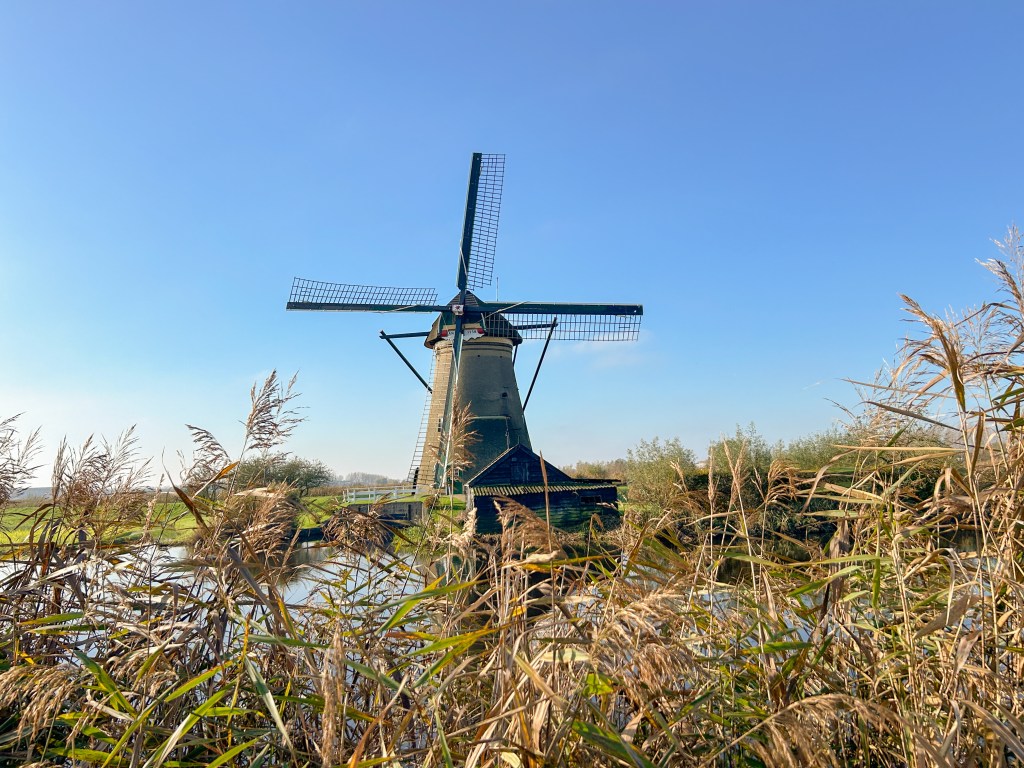
The Kinderdijk area has been inhabited for thousands of years, but since at least the 13th century, inhabitants have been working to manage water here to prevent flooding and allow for farming. By the 1740’s the Dutch had finally created a successful, innovative system of windmills and pumping stations to redirect water depending on river and rainfall conditions. Basically the windmills harness the power of the wind to pump water between the polders, reservoirs, and rivers. It allows them to control the water to prevent flooding and help irrigate their farmland.
What does Kinderdijk mean?
Kinderdijk means “Children’s Dyke” in Dutch; a dyke being a wall built to prevent the ocean or a river from covering an area. It’s sort of like a dam that runs parallel (instead of horizontal) to the water source. The name actually comes from a legend surrounding a massive flood in 1421. While a drainage system and series of dykes had been created, they were not effective. A massive flood came in and the dykes were swept away by rushing water. Legend has it that in the aftermath of the flood, a single cradle with a baby inside was floating in the river. There was a cat in the cradle that stopped it from sinking by jumping up and down, which saved the baby. This is why the area is called Kinderdijk. If you visit, you can see a statue depicting this legend in the water today.
How to get there
From Rotterdam
Kinderdijk is located conveniently close to Rotterdam – just a forty minute water bus ride away. To leave from Rotterdam, you can take Line 21 on the water bus from the Erasmusbrug stop. To get here from the city center, you can either take the metro or the tram to the Leuvehaven stop. From here it’s about a 5-10 minute walk to the water bus stop.
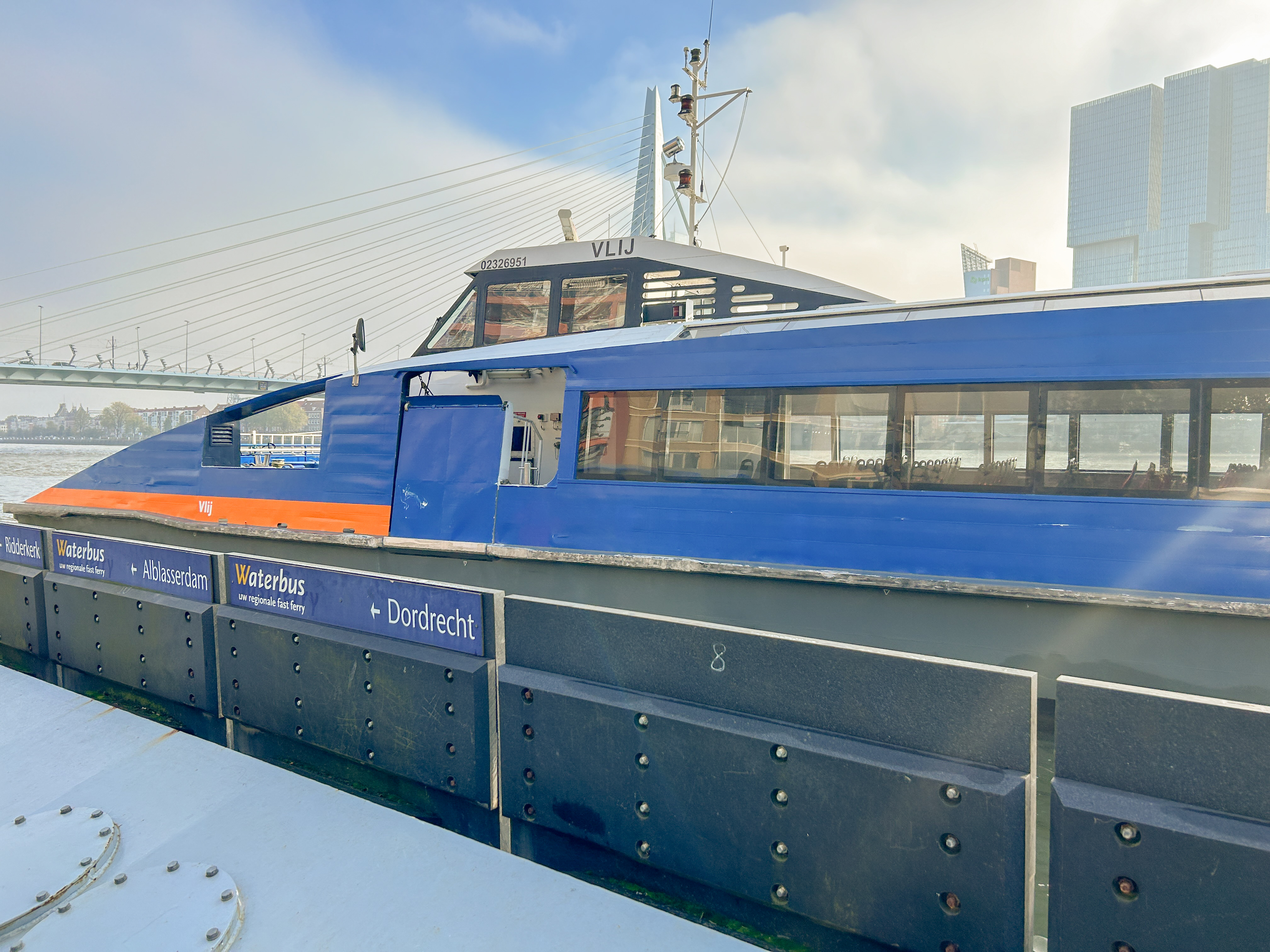
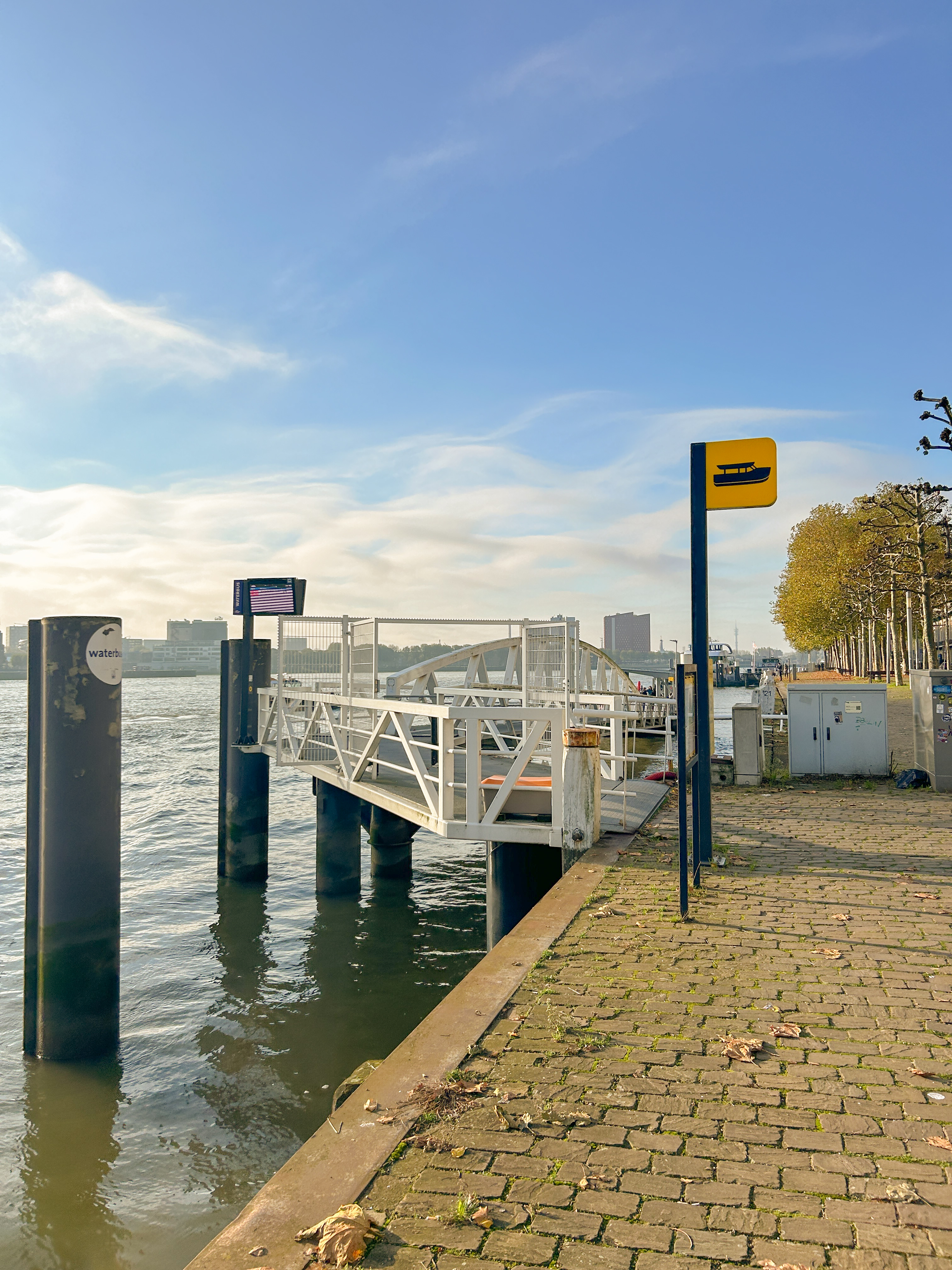
Cost: €9.60 (roundtrip) – you can either pay using your credit card at the “check in/check out” reader or via an employee on board. If you want to save some money, you can purchase your Kinderdijk entrance ticket online and add a discounted roundtrip water bus ticket for €7
Frequency: About once an hour, but the schedule varies. You can check the schedule for a specific day using this website and the ‘plan your visit’ tool. The official stop names are as follows (Rotterdam – Erasmusbrug : Kinderdijk – Molenkade). Pay attention to the routes for your return journey so you can adequately plan your time at Kinderdijk.
From Amsterdam
If you wish to visit Kinderdijk from Amsterdam, you will need to take a train from Amsterdam Centraal to Rotterdam Centraal. Depending on which train you take, the journey will take anywhere from 50 minutes to 1 hour and 50 minutes. From Rotterdam Centraal, you can follow the steps above to get to the waterbus stop.
Cost: €50 estimate based on €38 train (€19 one way) + €9.60 waterbus (roundtrip)
How much does Kinderdijk Cost?
If you only want to walk around the Kinderdijk area and admire the windmills from the outside, then there is no need to purchase a ticket. This is completely free and open to the public. So if you’re on a budget, you can still visit and walk or bike along the trails. You’ll still get to see amazing views of the windmills.
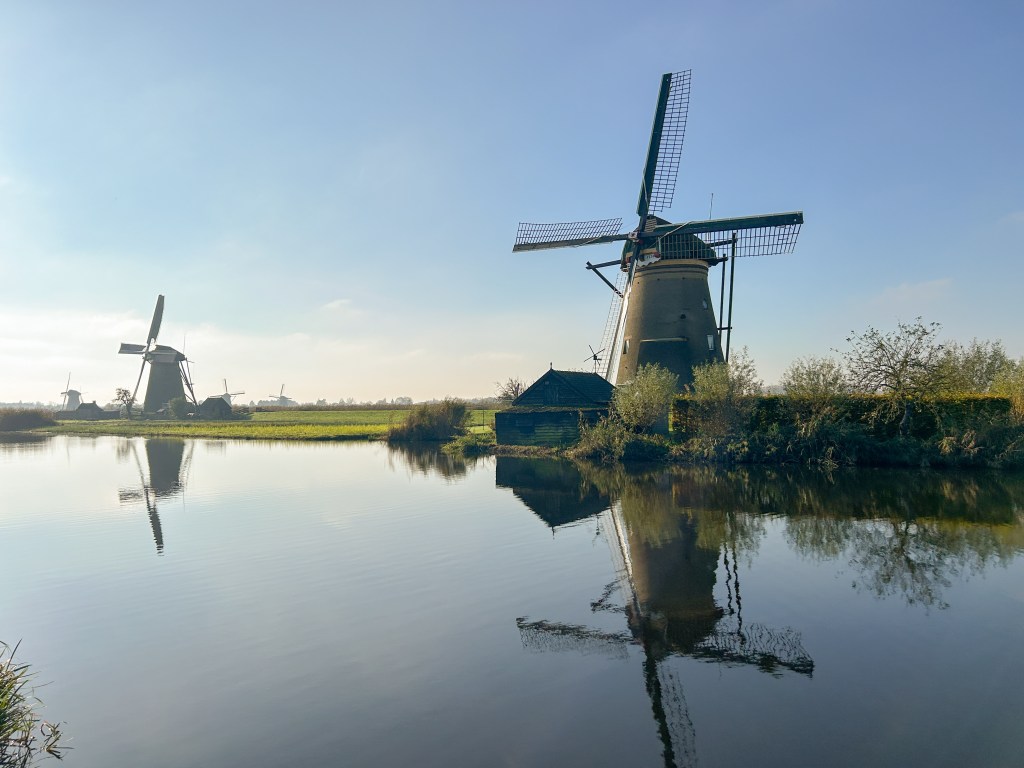
If you want to go inside any of the windmills, you will need to purchase a ticket. You can purchase tickets in person upon arrival or online in advance on their website here. Unfortunately, there is no option to choose which attractions you wish to visit at Kinderdijk – it’s an all inclusive ticket.
The price of the ticket is €19.50 and includes the following:
- Entrance into two windmills
- A 30 minute boat tour
- Entrance to a sailing ship with an exhibition below deck
- Entrance to the pumping station
- Entrance to the secondary pumping station with a short film and exhibition
Should I walk, bike, or take the boat?
This really is a matter of personal preference and circumstances. If you’re short on time, then maybe taking the 30 minute boat tour (included in your ticket) would be your best option. If you want the traditional Dutch experience, then why not try renting a bike? When I visited, I opted to walk between the windmills. The path is well maintained, and isn’t too far of a distance. I also arrived early in the morning and didn’t want to wait for the bike rental shop to open. I really enjoyed the calm waterways and ability to stop wherever we wanted without worrying about where to put a bike.

If you want to rent a bike, I read that Partycentrum De Klok is one of the best places to do so. I can’t personally vouch for them. But they are open seven days a week and you can rent starting at 11am. The price is €10 per bike with no time limit. Here is their website.
The Windmills – My Experience
I visited Kinderdijk on a beautiful Sunday morning in late fall. The water bus was really easy to figure out and there was plenty of seating inside (since it was a little brisk out with the wind). There isn’t a whole lot to look at along the ride, but there are a couple of interesting buildings scattered here and there to keep you entertained.
Most of the people on the water bus were headed for Kinderdijk. So as soon as we arrived, pretty much everyone got off. Step one was getting tickets, which was a breeze. At the information center / gift shop, you can go to the roof of the building for an elevated view of the windmills down the way. It’s a nice first view, but you’ll get a much better view as you progress on your walk down the path.

From here, we took the main path and followed it to the first two windmills. It’s not too far of a walk on a paved path with lots of tall grass on either side of the walkway. Just make sure to stay out of the way of the bikes, they’ll let you know with a friendly bell ring if you’re in their way.
Museum Mill Nederwaard
Walking along this path you will pretty quickly come upon the first two windmills on your right hand side. The second windmill is one of the two that is a museum and you can go inside. You will have to cross a small bridge and then you can get up and close to the windmill. They will check your tickets as you enter the gated windmill area.
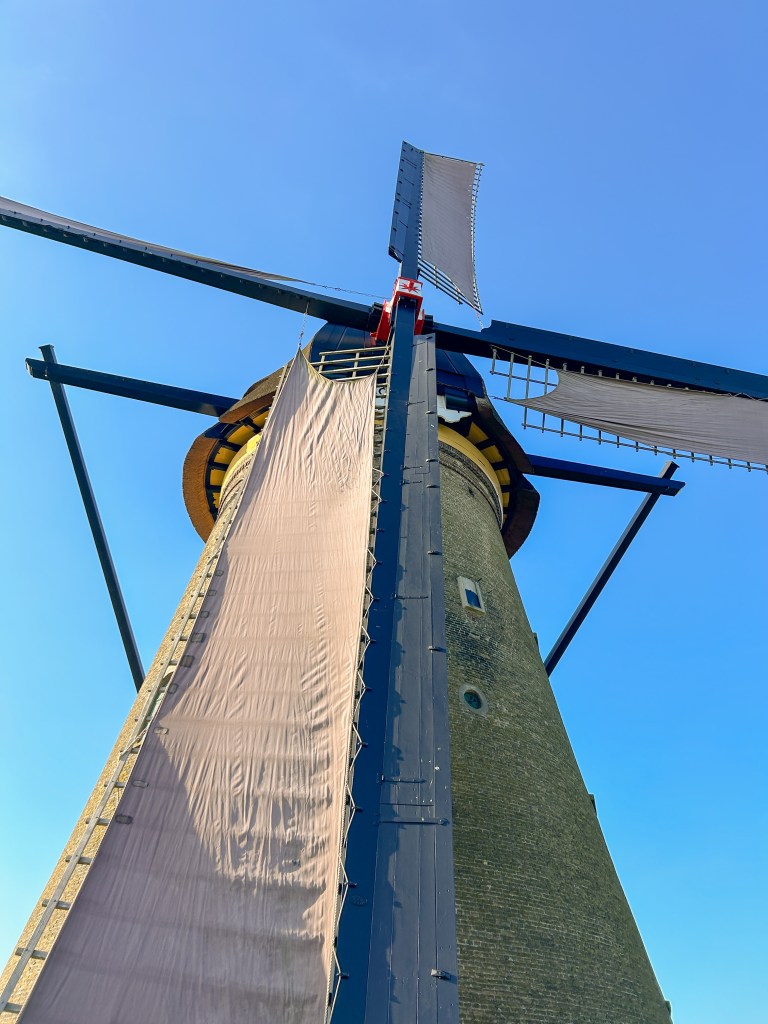
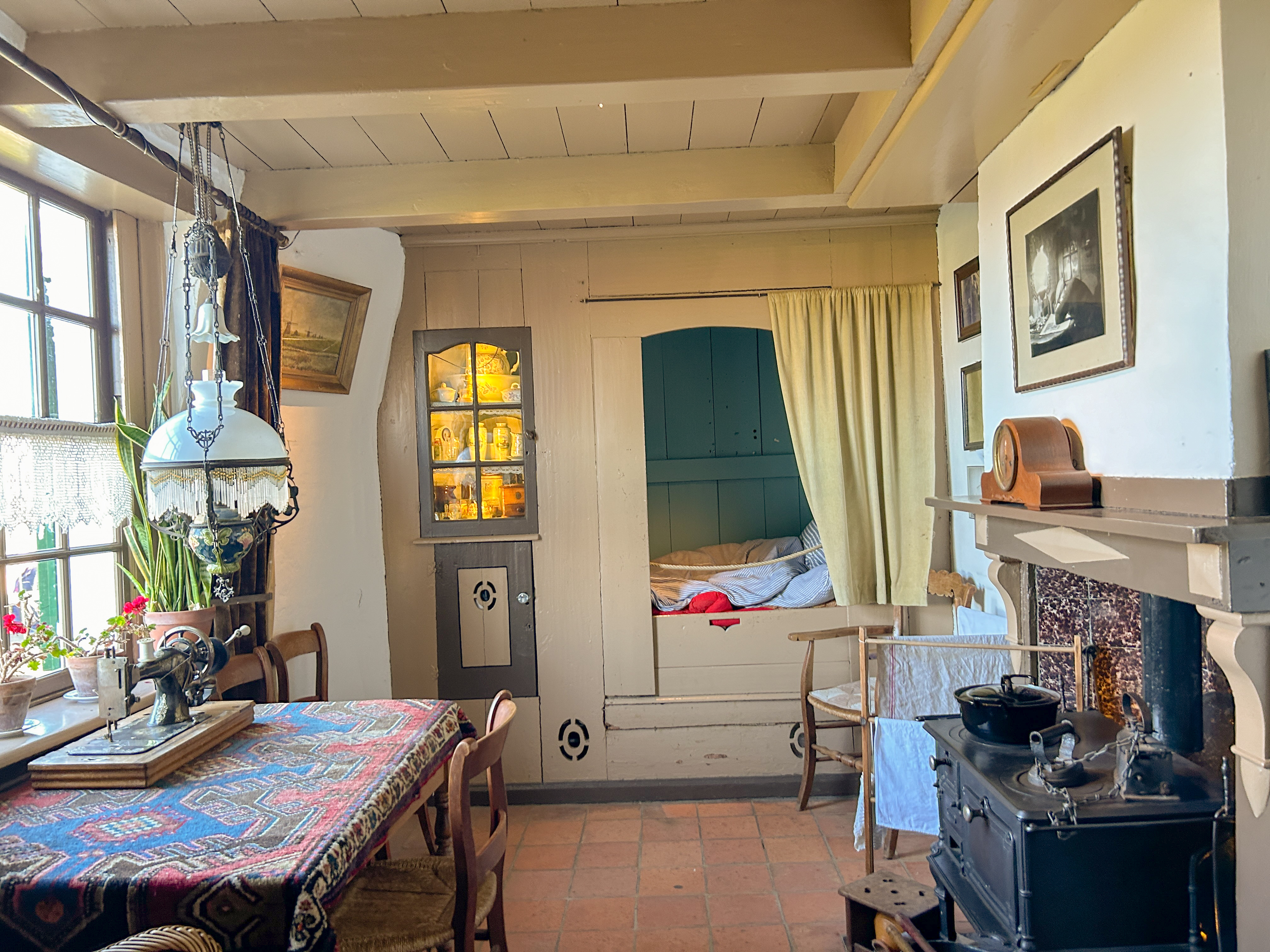
The stone windmill here was built in 1738 and is preserved to look as it would have back then. It’s a tight fit inside but it’s really interesting to see how the living space merges with the inner workings of the windmill. The very middle of the windmill has all of the gears and other pieces that make the windmill run. So all of the living space is on the edges of the circular shaped mill. It’s sort of like a donut, where the hole in the middle is full of very noisy equipment and the rest of the ‘donut’ is where you can live. You also get to go up the steep stairs to see the varying floors of the windmill. When I visited, there was a worker inside who gave information if you asked and could answer any questions that you had about the function of the windmill or lives of the families that would have lived here.
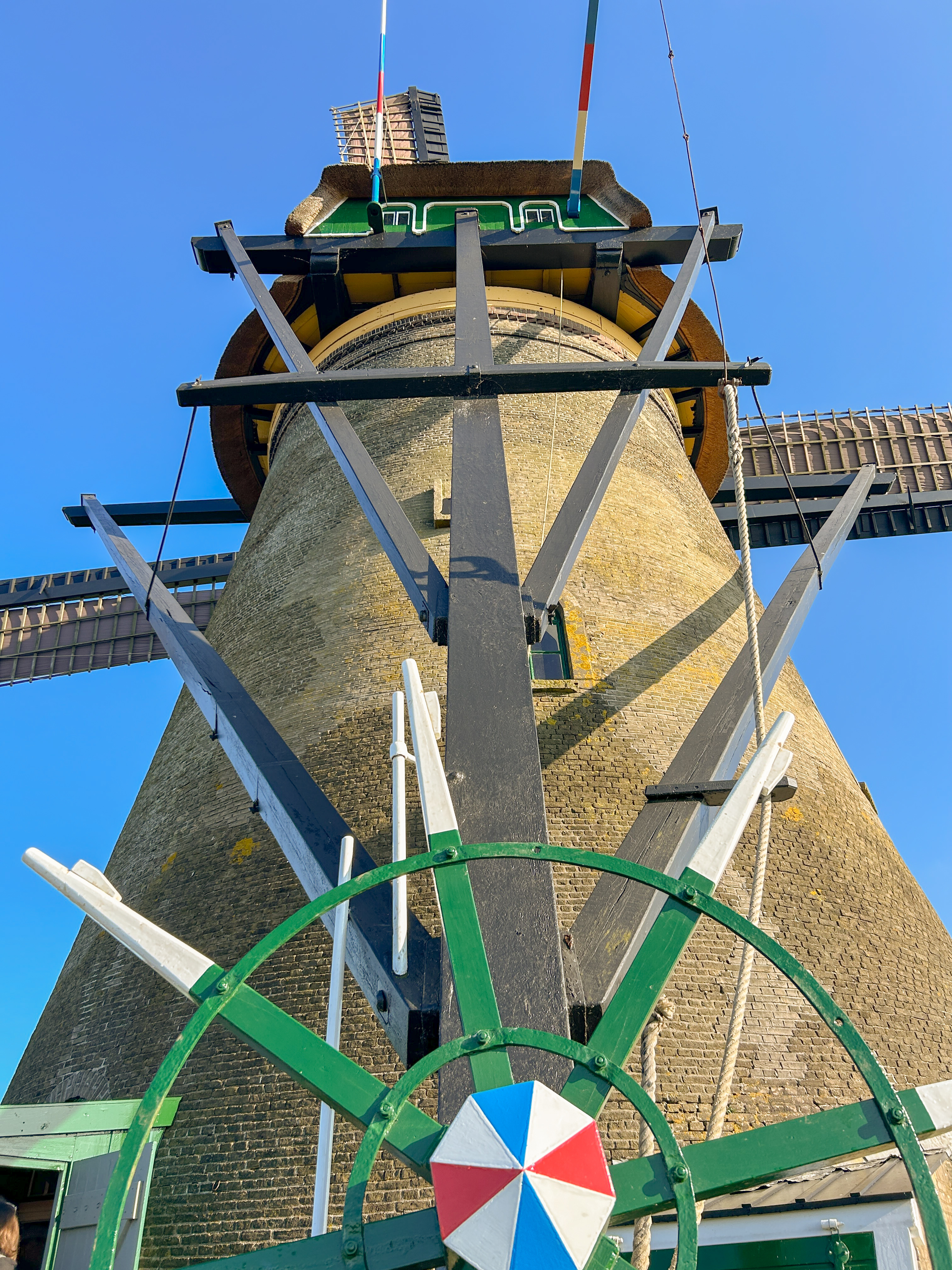
For me, the most interesting fact I learned here is that the turbine can actually rotate on the tower. Obviously I knew that the sails themselves could spin – that’s the whole purpose of a windmill. But for some reason I never thought that the direction of the sails could be adjusted to face any direction, depending on the wind. How cool!
After the first museum, there is quite a distance before you reach the other windmill museum. In between the two you will have an opportunity to enjoy the path and take a side detour to see some of the other windmills. The majority of the windmills are privately owned and lived in so this is why you can only visit two of them.

Museum Mill Blokweer
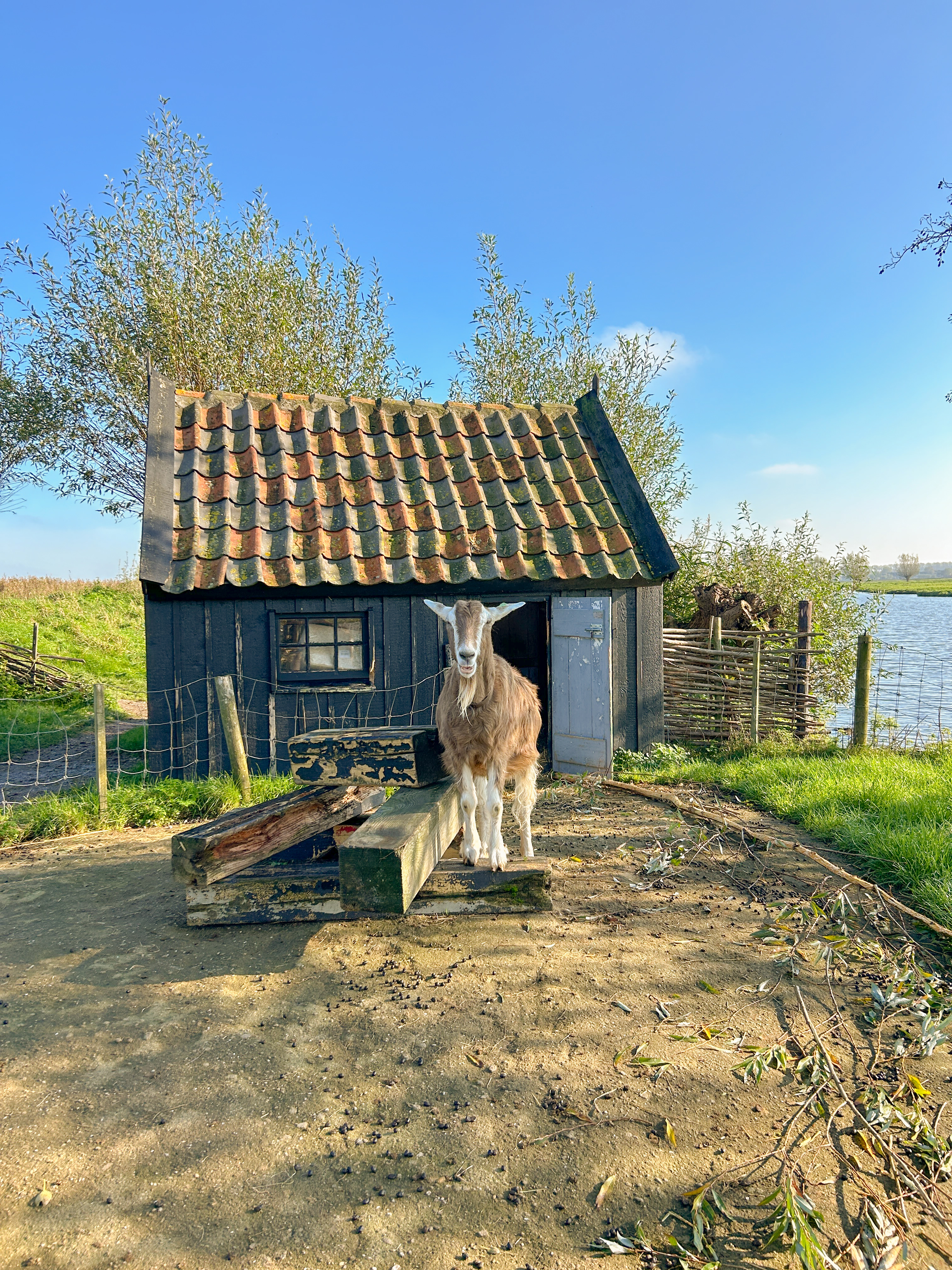
Much farther along the path, you will find the second windmill that you can enter with your Kinderdijk ticket. This windmill originally dated back to 1631. However, in 1997 it was destroyed by a fire and had to be rebuilt in its original form. The exterior is quite different from the other windmills because the scoop wheel on this windmill is actually on the outside, not the inside. Additionally, the interior of this windmill exhibits a more modern design which helps you try to imagine how some of the windmills that are currently inhabited might be used today. There isn’t as much to see on the inside of this windmill as the first one. However, there are a couple of other things in the area including a little farm with some goats and a sailboat exhibit.
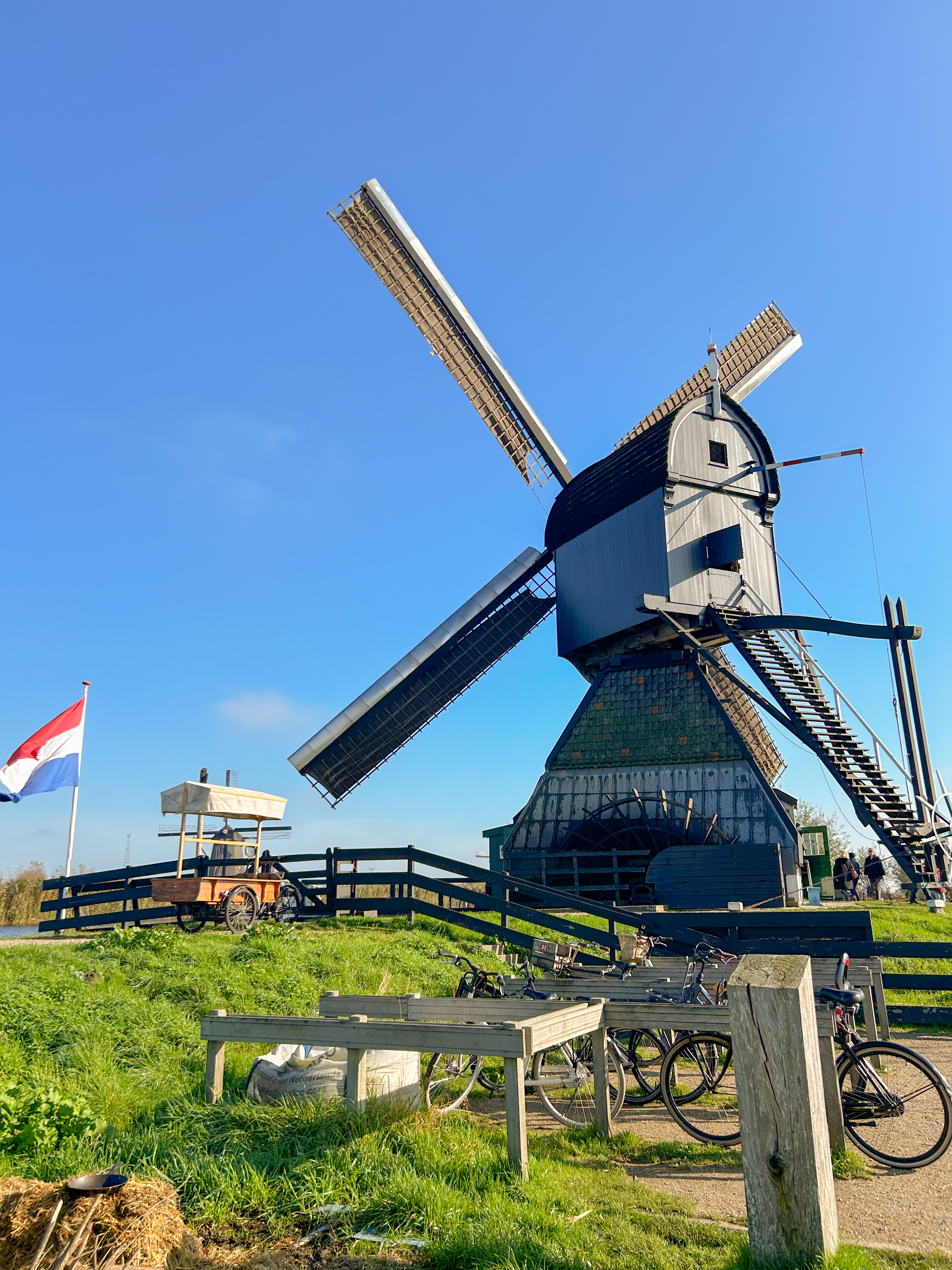
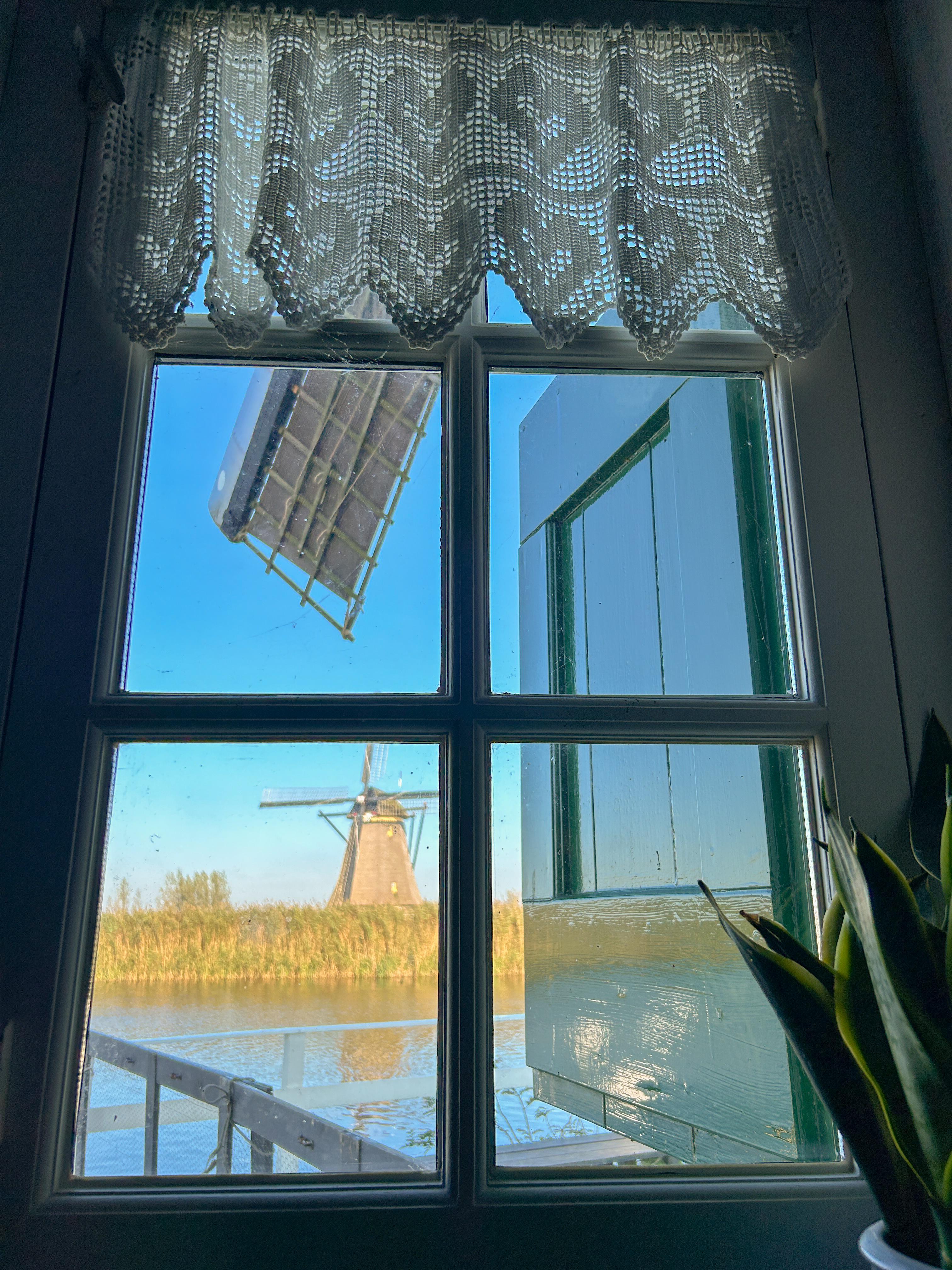
On the day I visited, this windmill was spinning and I’ve read that this windmill is often allowed to spin for tourists. It was impressive to see how fast the sails can spin in the wind and how close they are to touching the ground. You can imagine how dangerous it might be if you weren’t paying attention and got slammed into by a sail!
Strolling along the polder
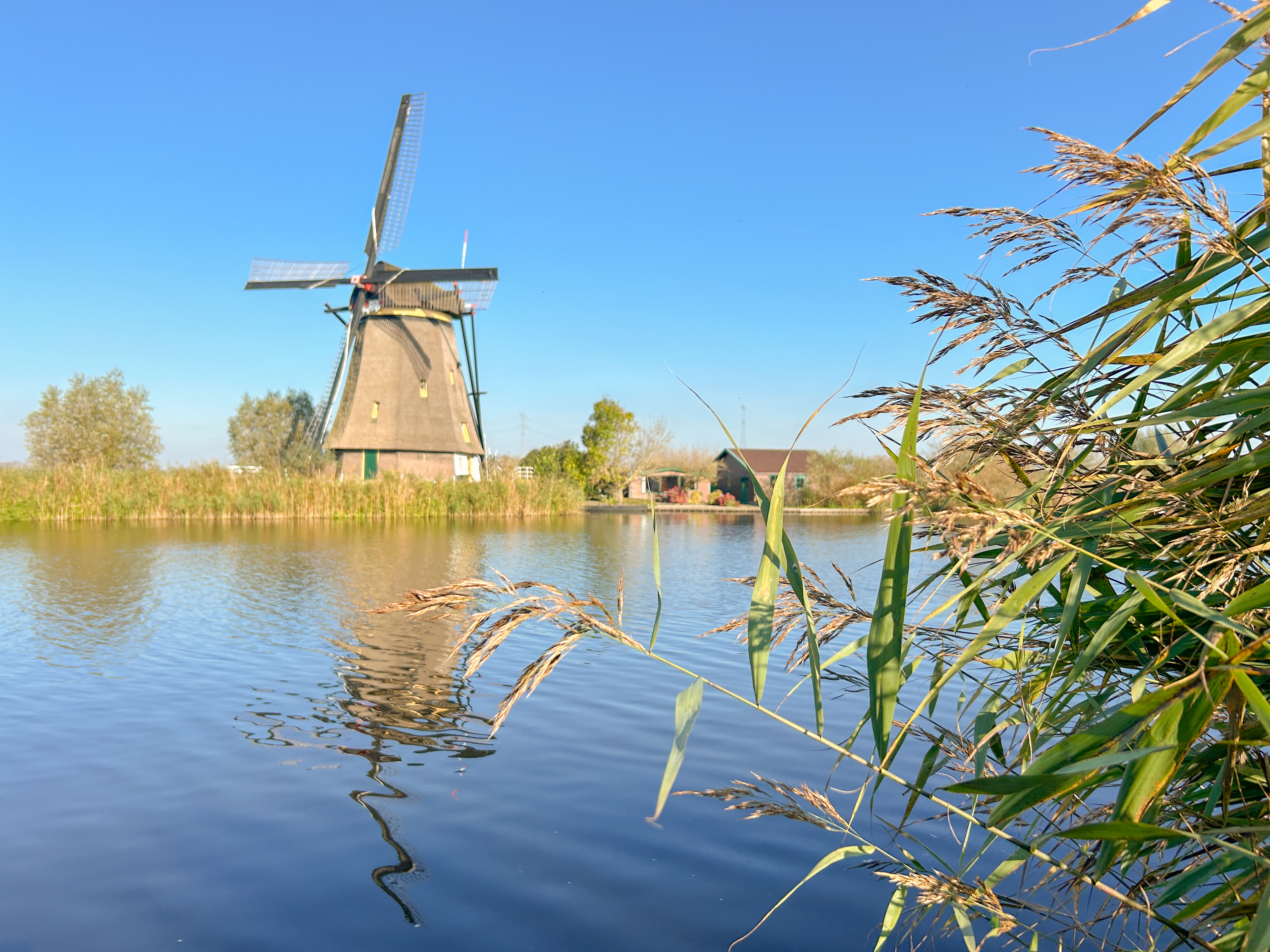
My favorite part of Kinderdijk was simply walking along the polder near the water’s edge. It’s really quaint and there are tiny docks along the water where you can get a better view of the windmills or take some photos. It’s perfect for a morning or afternoon walk and a picnic. Obviously the earlier you go, the quieter it will be. If you really enjoy the landscape, the path along the polder continues for quite a ways so you could walk around in the area for an extended period of time to take in the views.

Tips & Tricks
- Bring a picnic – stop at Albert Heijn, or another grocery store, before you take the water bus. Grab some snacks or a picnic lunch to bring with you. (As a vegan, I love that Albert Heijn has a pretty good selection of plant based products in the grab and go section). There are some picnic tables and benches along the route, or you can sit on one of the very small docks along the water with excellent views of the windmills.
- Arrive early – there are river cruise ships that stop to tour here. So there will be giant groups of people being led by their cruise tour guides. You don’t want to be stuck behind or in between these groups, specifically when going inside the windmills because they aren’t very big.
- Take a free audio tour – if you download the Bloomberg Connect app, they have two free audio guides (a 45min tour and a 1hr30min tour) for Kinderdijk. This is a great way to get more information and history, especially if you just want to walk around and not pay the entrance fee.
Conclusion
Kinderdijk is more than just a photo opportunity – although admittedly, it is a pretty good one. It’s a place whose rich history and tranquil atmosphere allow you to glimpse into the Netherlands of the past. Whether you choose to walk, bike, or take the boat, you are sure to enjoy your time exploring the beauty of Dutch architecture and landscape.
If you’re planning a trip to nearby Rotterdam, be sure to check out my blog post with all the best things to do in the city below!
Exploring Rotterdam: Amsterdam’s Quirky Modern Cousin




 Courtney Plans Travels
Leave a comment